Showing posts with label Emerging Church. Show all posts

Sunday, January 17, 2010

Stop going to church


Here is a good post that I found over at boundless.org:


Stop Going to Church

by Jonathan Dodson


For years I went to church. Religiously. I actually went to church for about 25 years. Then I stopped. I'm so glad I did. Instead of going to church, I started being the church. It's radically changed me. They have changed me. My family has gotten bigger.

The church is supposed to be a family. But there's a problem. The church in America is too often very un-church. As a result, a lot of people say that they like Jesus, but they just don't like the church.


Unbelievable Churches

Some churches are fortresses. Groups of combative soldiers that enforce their doctrine, hide behind their high and holy walls, and launch grenades of judgment into the culture. The mission is doctrinal conformity, not grace. The community is in-grown not inviting.

Other churches have more in common with shopping malls. They are filled with salesmen and consumers. The salesman market the church to the world. They dress her up like the culture, dress down the message of Jesus, and sell the consumers short on the gospel, community and mission. Unlike fortress churches, the shopping mall mission is not to keep people out but to get people in. At quite a high cost, people pile into the building and out of the building wondering if this is all there is to church.

Then there are the cemeteries — lifeless, irrelevant, stodgy churches. These churches are trapped in time, disconnected from contemporary issues. Somehow they've lost the joy of the Lord. Calcified by religion, they offer virtually no community or mission.

When our churches have more in common with fortresses, shopping malls and cemeteries, who can blame America for not liking the church, for not receiving in her, for not joining the movement?

Family Church

Church is not an event, a place or a plant. It is a family of brothers and sisters united in the Spirit and the Son. The church is a community, people in relationships under grace. So the church is supposed to be a family, but we act more like acquaintances.

Instead of sharing life and truth, joy and pain, meals and mission, we share one, maybe two events a week. Church has been reduced to a spiritual event that happens for an hour or two on weekends, and if you are spiritual, occurs another couple hours during the week in a small group meeting. We spend just enough time "at church" to be religious, but nowhere near enough time to be family.

The dominant metaphor of the church in the New Testament is the metaphor of family. Every one of Paul's letters opens by addressing the church in familial terms — sisters, brothers, son, and our Father. The use of "brother" is, by far, the most frequent. This sibling emphasis reflects the familial nature of the church. What would happen if we started acting like family?

Friday, January 8, 2010

Religion Saves by Mark Driscoll


Way back when, Mark Driscoll decided that he was going to base a sermon series on the questions put forth by thousands of internet denizens. He called the series, Religion Saves: and 9 other Myths. I mentioned it in my Ask Anything Post. He claimed that much of Paul's Epistles were done in the same vein - answering questions that the Church was struggling with - like, "If I sleep with my stepmom, is that bad?" (I Corinthians)


It was during this preaching series that Driscoll began taking questions from the audience during the sermon (Oral Sex Virgins, Masturbation, and Pregnant Rape Victims) . They would text in their question and he would respond to some of them after the conclusion of the sermon. He has since continued this practice.


In the book, Driscoll devotes a chapter to each of the questions that were highlighted in the series.

1.Birth Control


2. Humor


3. Predestination


4. Grace


5. Sexual Sin


6. Faith and Works


7. Dating


8. The Emerging Church


9. The Regulative Principle

I'm not a huge fan of reading a book that is based on a sermon series I've already heard, but the truth is, I'd rather read a rehash books of Driscoll's than most of the other books out there.

Monday, January 4, 2010

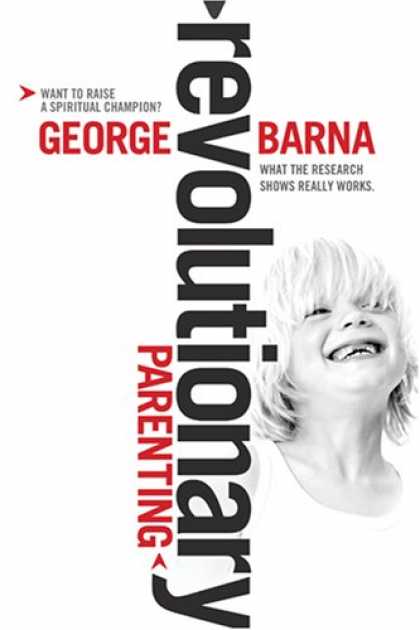
Revolutionary Parenting by George Barna


The cover art and title of this book would make you think that it is somewhat of a sequel to his book, Revolution. But it isn't. It is actually more of a sequel to his book, Think Like Jesus. I think that he just used the titling and cover art (as he did with Pagan Christianity) because the book, Revolution, was groundbreaking and controversial and therefore, popular.


If you'll remember, Think Like Jesus (which I reviewed way back when) used short tests amidst his polls to measure whether people were actual Christians or not - not just whether they gave lip-service to the label of "Christian". Obviously, such a test is practically impossible to give credence to, but it still enables one to sift a bit of the garbage away, so to speak.


Barna, then went further and gave people a slightly longer test to determine whether they had a Biblical worldview or not. He went on to say that those people with a solid Biblical worldview lived lives that were vastly different from those who did not have a Biblical worldview - despite whether or not they claimed to be a Christian.


In Revolutionary Parenting, Barna takes this idea a step further and polls children, teenagers and young adults (20 somethings). He determines which of these children/teens/young adults has a Biblical worldview and then tries to find common threads among the familial culture in which they were raised.


Once again, using his research, Barna is quick to point out that he is only the messenger, and that some of his findings are counter-cultural. This would be where this book ties in with Revolution - as he finds that "parenting that produces spiritual champions is often with little or no help from the Church."


Some of his findings:


  • The lion share of responsibility for raising children falls upon parents, not churches, schools, or daycare workers - no matter how much time children spend in these institutions. The more time parents spend with their children, the more success they have in spiritually shaping them.


  • Parents who put the emphasis on character development rather than academics, sports, arts, or other distractions have the most success.


  • Single parent homes are screwed. Seriously. As he puts it, the research simply shows that if you are a single parent, you are screwed.


  • One-income families are profoundly more successful at raising spiritual champions, despite its counter-cultural position. He says that families that bite the bullet and figure out how to leave one parent at home have a huge statistical advantage - like it or not.


  • Parents who use strong disciplinary measures - strict adherence to threatened punishments, curfews, etc. - have a big advantage despite the counter cultural trends.


  • Parents who pray together (outside of mealtime grace), study the Bible together, and engage in Spiritual discussion together have the major advantage over parents who rely on the Church and Youth Groups to cover this ground.


  • For the 20 odd-years that you are a parent to a child, this responsibility should be your primary responsibility. Not second or third to anything or anyone else.


Basically, the wishy-washy mediocre so-called "Christians" that were outed in Think Like Jesus are breeding and raising wishy-washy mediocre so-called Christians in the next generation.

Thursday, October 8, 2009

The Rape of Solomon's Song

I've long been a fan of John Macarthur's exegesis, but never his personality. The older he's grown, or the older I've grown, depending on how you look at it - I've found this gap to have grown wider and wider.

Of course, it doesn't help that Macarthur has made it his personal mission to constantly attack Mark Driscoll of late. Even calling on "older mentors" of Driscoll to admonish him for his unbecoming behavior and language.

According to the 70 year old Macarthur, "certain body parts are unmentionable". Says who? Macarthur quotes 1 Corinthians 12:23 as his basis, which is weak.

Macarthur says much more than that, but I find myself writing much of it off as a grumbling unhappy old man who is flustered by his younger counterparts and their "foolish" ways.

Macarthur may have been offended by what Driscoll said, but I wasn't. And it isn't because I'm worldly, crude, or evil. Its because I like to be taught in direct terms without added fluff.

I'll leave it with these words from Macarthur, "I should explain that I don't use the Internet directly; I don't even own a computer or have an Internet connection in my home. I'm totally dependent on staff and pastoral interns who print material that I need to read and make sure I get it."

Postscript: Here is Driscoll's response to the attacks by Macarthur.

Wednesday, August 19, 2009

Mars Hill Church, Seattle - Annual Report


Its weird. I don't go to Mars Hill Church in Seattle. Never been there, in fact. I occasionally check in on their podcasts, occasionally listen to their in-house worship music, and occasionally read their blogs.

But I don't belong to their fellowship, don't invest in their fellowship, and really don't have any plans to do either.

But for some strange reason, I feel a connection and a tie to their endeavors.

Obviously, I like Mark Driscoll as a preacher and an author.

But there is something about the transparency and purposefulness of their church that I find compelling.

Each year, I print out and read through the Mars Hill Church Annual Report. I love it. It gives so much information and inspiration. I don't know why exactly - I think maybe its because it makes me feel like a part of the mission - even when I'm not and have no intention of becoming a part of it.

I've read stories about people moving across the country in order to go to Mars Hill and be a part of its ministry. I appreciate these stories, but I am not wired this way.

I've also read stories about groups of people starting "unofficial" Mars Hill campuses in their own homes in far away parts of the country and the world - once again, I appreciate these stories, but I am not wired that way either.

No. I am happy to sit down with a cup of coffee and read through the Annual Report.

The cover page of the report says, "It's all about Jesus." The report is about 20 pages long. They give some stories of Changed Lives - stories that they run regularly on their website each week about people whose lives have been changed by Jesus.

The report talks about their regional growth, their local growth, and their global growth - missionary training, church planting, campus launches, etc. There are three whole pages on their financial endeavors, both incoming and outgoing. It is really quite detailed.

They talk about their micro missions projects. They also discuss their ministries which reach thousands - websites, technology, etc. They also focus on their discipleship ministries - home groups, bible studies, etc. They have 353 community groups with 3933 participants. They have 39 elders and pastors with 17 more in training. They are very purposeful in both discipleship of leaders as well as the church body as a whole.

They go into great detail about their church planting network. It is with chagrin that I note that they still do not have a church plant south of Orlando - I'd just like to check one out - is that too much to ask. They have planted 173 churches so far - 53 in the past year.

As I said - the report is inspiring. I like that, at this point in the game, Driscoll doesn't have his name plastered all over the report. If you didn't know any better, you'd forget that he was involved at all while reading through the report.

Tuesday, June 30, 2009

But this one disturbs me most......

In Gary Lamb's recent post about his downfall/recovery, there was only one sentence that I found disturbing and upsetting:

I believe with everything that is in me that God is not through with me in a full-time ministry role but I do believe He has me on the sidelines right now to get some things right in my life.

I just don't get it.

There are plenty of men out there who are faithful to their wives. Let's say that 50% of all marriages end in divorce. Let's also hypothesize that 20% of those 50% that stay married cheat on their wives, but still stay married. That would leave us with 30% of men who are able to stay married and faithful. Let's further hypothesize that that 30% is just too generous of a number - let's say, that realistically, only 20% of men could be trusted to remain faithful to their wives.

Now. Shouldn't that 20% be expected to be our leadership? Why are we relying on the other 80% at all?

Of course, naysayers will throw out central themes of the Bible like Fall and Redemption as an excuse for reinstating someone like Gary. But the Bible also has plenty of stories about God calling out those few who show true signs of inward character, rather than those outward signs of exuberance or talent.

I just don't get it.

Is there no such thing as disqualification? Does character matter? Are we that desperate for someone who has talent?

I sometimes wonder how many "true leaders" / aka shepards are being hidden in some of our churches. Or if they are even in church at all?

How often are we trading image and talent for character and obedience?

I've got nothing against Gary for what he's done. I still think he is quite an entertaining character. I agree with Perry Noble, who stated that each of us are only a few missteps from a similar fate.

But I believe that Gary needs to get a real jobby job, like the rest of us. And forget about being a shepard.

He needs to go to church and just enjoy it, like the rest of us.

Monday, June 8, 2009

Pastoral Failure #1,673: Gary Lamb

My mom told me recently of her recent church experience. A few weeks ago, she went to church only to have the two elders of the church get up and read a letter stating that the Senior Pastor of ten years had been removed for indiscretions unbecoming of a pastor.

I think I've become jaded. In fact, I'm sure I've become jaded. In the back of my mind, I've come to expect this of pastors. It has no bearing on them personally, it is just a fact of life. People fail, men especially. Men with egos even more so. Men held up on a pedestal even more so. So I leave that possibility open in my mind, so that, when it happens, it doesn't shake my faith in Jesus, just my faith in men.

My two favorite preachers to listen to, unarguably (Sorry, Dave.) would have to be Mark Driscoll and Gary Lamb. As Driscoll has gotten more and more popular - a world traveller of late - and more successful, I've left that place in my mind open to the possibility of his failure. "When Mark Driscoll falls, I won't be shocked or hurt by it, I'll simply move on, " I tell myself.

So with my eye on Driscoll, it came out of left field for me to read on Gary Lamb's blog this week of his relational/sexual failure which has removed him from his ministry.

Oh well. I'll move on. Of course, I'll pray for those involved, but as I said - I'm jaded.

Monday, September 15, 2008

High Tech for Jesus

Call me a tech junkie, but I really do appreciate the availability of HD video via the Internet. Especially when I can stream it through my PlayStation 3 to my TV.

I especially appreciate being able to watch Mark Driscoll preach - on demand - on my television.

Here's the set up that makes it possible at Mars Hill Church, as well as their justification for such a massive expense.

Thursday, January 10, 2008

Mosaic Miami

Church Field Trip # 25

Erwin Mcmanus is the pastor of Mosaic in Los Angeles, one of the original, more prominent "emerging" churches (circa early 90's). So it goes without saying that we had high expectations for our experience at Mosaic Miami. I remember first reading about Mosaic years ago in Newsweek magazine, in an article about new kinds of churches trying to reach younger generations in new ways. I do believe that that article was also the first time I was introduced to xxxchurch.com.

This was our first visit to an inner-city church. Mosaic is located in the heart of downtown Miami. They meet in a secondary building that belongs to Christ Fellowship's new downtown campus. Mosaic has been meeting in that building for four years, but Christ Fellowship, a growing Southern Baptist church with five Miami campuses, is presently threatening to muscle them out. Much like our visit to Metro South last month, Mosaic has completely transformed the space that they use for worship. This was a small room filled with about 50 people, couches, comfy chairs, tons of candles, paintings, art, bistro tables, and Bibles laying around everywhere. The communion elements were also made available on a back table near the lone offering box. The attenders were very diverse in both age and ethnicity, further dispelling the myth that emerging churches are for young, white trendy college students.

Upon entry, we were immediately engaged in conversation with the bi-vocational pastor, Kevin Sutherland and his wife, Shari. (When I called last week to simply ask for directions, Shari engaged me in a half hour conversation about their vision.) The setting was about as informal and comfortable as a worship setting could possibly be. As a matter of fact, everyone sat in their couches through the first half of the worship set. They pointed out, at the close of the worship set, that their drummer had just started playing the drums this past week. What a great illustration of God equipping his church to have a worship service. BTW, the drummer did a great job.

During worship, three different women read from scripture. After the worship was finished, they broke for a ten minute intermission so that everyone could mingle and conversate. (What a great idea. This beats the typical 10 second "turn around and shake hands"). They also announced that one of their members has a brain tumor, is unable to work, is a single mother, and needs help paying her bills. They asked everyone to prayerfully consider how they might help this woman. I like this, because it puts a face on where a person's money is going.

Kevin is one of the best preachers that we have seen in these 7 months. He is informal, practical, and fun. I also thought it was unique that he taught with his laptop at his side, rather than written notes. When writing these reports, if I think that a preacher is boring or long-winded, I keep it to myself. Normally, I like to dwell on the content of their sermons more than the delivery. In Kevin's case, though, I thought it would be worth mentioning that his preaching style is very enjoyable - or maybe it was just because we were hanging out on some comfy couches.

He began the teaching by reading an excerpt from Irresistible Revolution, by Shane Claiborne. He then proceeded to preach for almost and hour and a half, referencing more than a dozen verses, including: Jer. 29:4-13, 1 Cor. 9:16-17, Gal. 5:7-8, Heb. 12:1, Ex. 34:5-7, Lev. 26:39-43, 2 Cor. 1:20-21, 2 Peter 1:3-4, John 4:2-5.

Here are some notable excerpts:

"90% of people who claim to be born-again Christians have not read the entire Bible. They've read bits and pieces, and even memorized smaller pieces, but how can they have a holistic view of the Bible without reading the whole thing?"

"Community is everything. If you don't have community, you don't have anything. Jesus didn't come to start individual faiths, He came to start faith communities."

"In community, we have an opportunity to show the love of Christ in a dramatic way."

"Everyone ends up somewhere, but few of us end up there on purpose."

"I don't expect you all to agree with everything that I have to say. That's ok. Questions are ok."

"God is calling the world back to Himself."

"God tells us to 'go forth', not 'huddle up'."

"You and I are called to join ourselves to community. Period."

"Your gifts, talents, and abilities are not given to you to be used for yourself, but for community."
After the service, we talked with Kevin and Shari for another 15 minutes. They told us that Calvary Chapel Fort Lauderdale (their former church home) helped them in the planning process for the church plant, but McManus asked them to become a part of the Mosaic family. "We just felt like we didn't fit in with the typical church crowd, so we started this church." They invited us to come over to their house for lunch, but we had to regrettably decline. It was a great gesture though. Also, most of the congregants gathered outside after the service to hang out and eat lunch together. I always appreciate when a church manages to break bread together during a worship service.

Monday, December 17, 2007

Vintage Worship Gathering

Church Field Trip #22

The name alone would suggest that Vintage Worship Gathering (VWG) is, without a doubt, an emerging church. More so, that they would especially have a Dan Kimball influence - as Kimball supposedly coined not only the term "vintage worship" but "emerging church" as well. I must admit that when I first read Kimball's book, The Emerging Church: Vintage Christianity for New Generations, I didn't quite get it. I struggled to grasp why and how an almost "Catholic" atmosphere would work within a postmodern worship experience. Having experienced this atmosphere at VWG, I now get it. Take the beauty and serenity of the Catholic experience that we had months ago, and infuse it with postmodern relevance and you have a service that is beautiful, serene, and NOT boring. Go figure. It actually works.

We arrived about 15 minutes early to find that they have a 1/2 hour of "hang time" before the service. They all arrive early, eat breakfast (quiche, pastries, cookies, bagels, juice, coffee, etc.), and build relationships. During this time, we were engaged in conversation with at least 5 different people, including Albert - the preacher. I never once heard him or anyone else use the term pastor, so I won't either. There were candles everywhere, as well as plenty of comfortable chairs to sit in while everyone just hung out. It was a very inviting and comfortable atmosphere. Also, everyone wears a name tag, which has both its advantages and disadvantages.


VWG shares a small playhouse theatre called Mos'art with a theater company that performs plays there as well as an art gallery. It was a really cool set up for a church service; sorry, worship gathering. Albert started the church about a year ago with 15 other people who were tired of "church as usual". They now have about 50 people each week gathering in the small theater that seats about 100.

The worship was acoustic (two acoustic guitars and one djembe) and introspective, though we were told that their worship experience can often run the full gambit from small and acoustic to full-blown electrical onslaught requiring them to hand out earplugs at the door. I neglected to take a picture of their stage setup because the theatre company was putting on a show that afternoon and the stage was set up accordingly for the play itself. The worship leader introduced himself only as "Captain." I didn't inquire about the name's nature or origin.

Before preaching, Albert brought two soon-to-be missionaries, Nick and Jesse, up to the stage to discuss their missionary calling. In the spring they will be going to a Muslim country that is hostile to Christian missionaries, so they will actually be working for an NGO there and spreading the Gospel on the sly. I'd like to also note that during the entire service, I believe we were lead in prayer at least half a dozen times by at least three different people.

Albert used Matthew 2:1-12 for the basis of his sermon. Here are some notable excerpts from his teaching:

"Every day that you submit to God, you become more like Jesus."

"I always find myself wanting to build up my own kingdom, rather than live in God's kingdom."

"Repent and believe, because the kingdom of God is near."

"The Gospel is Christ breaking into this world, bringing God's kingdom. This presents us with a choice - whether or not we will submit to His rule and authority."

"The Gospel is this: God isn't on a power trip. We are on a power trip. He let us kill Him. And yet He still invites us to join His kingdom through mercy and forgiveness. Is this Good News to you? Or is it Bad News?"

"It is God's desire to have a relationship with you, even to the point of self-sacrifice."

We had a great time at VWG. It was very relaxed, authentic, and easy to engage despite us being first-timers. Having to drive an hour away to find a church like this is just heart-breaking in a metropolis with more than 5 million people.

I'd like to remark on something that I noticed at both VWG and also at Epic Remix last month. While both of these churches definitely have their fair share of twentysomethings, they are by no means solely made up of youngsters. Kelly, at 48, and Albert, at 40, have both managed to find a faith that appeals to all ages, if the makeup of the congregations is any indication.
Follow-up: We received a personally written email from Albert.

Friday, December 7, 2007

Tom Brokaw reports on the Emerging Church

Tuesday, November 13, 2007

Epic Remix Church

Church Field Trip #19

Our first emergent church! And possibly the only one we'll find in South Florida. Epic Remix was planted a mere 3 weeks ago. The founding pastor, Kelly Lyons, was a pastor at Calvary Chapel Fort Lauderdale for the past 13 years. They meet at the North Broward Prep School at 6:30 pm on Sunday nights. (They meet on Sunday nights out of necessity, not preference.) Kelly was raised by missionary parents in Peru, but has lived in the States for the past 17 years. Kelly draws no salary from the church and has no plans to draw a salary. Epic Remix intends to give away 75% of its income, using only 25% for in-house costs.

It would not be appropriate to state whether or not we were "greeted." Rather, we had at least 5 different people engage us in genuine conversation before the service began. Two of these people were Kelly - he doesn't like to be called "Pastor Kelly"; and Chelsea - she runs the Homeless Outreach program called Love Bags. They don't just throw stuff at the homeless, but they actually get to know them as friends. They are even housing a couple of them in their own homes. The service began about 7 minutes late, but we didn't mind because we were enjoying the conversation.

Epic Remix openly models themselves after Mars Hill Bible Church/Rob Bell and Mosaic Church/Erwin Mcmanus (both prominent "emerging churches") - though I found it curious that Kelly didn't know that there was a Mosaic in Miami. The set up was a half-circle of chairs with Kelly seated on a stool in the middle. They began the service with a New Testament reading - a woman got up and read Col. 1:19-23.

The worship time was leaderless. In other words, it was us facing the screen. Despite the fact that they supposedly have a handful of worship leaders in the congregation, Kelly wanted to experiment and try video-led worship. It was a little weird; a little uncomfortable. But it was also kind of cool. I've never been so aware of the people around me. Unfortunately, our posse of 7 (4 adults, 2 youths) seemed to be among the few in the group of 60 people that were actually excited about worshipping. It was a catch-22. The videos that they played, Hillsong, were high-energy and really enjoyable. But most of the crowd around us, including Kelly standing at the front, seemed as if they were disinterested in worshipping.


Following worship, Kelly taught on I Kings 9-11 for about 20 minutes. The title of the teaching was "Everything is Not O.K."This passage showed that Solomon was beyond wealthy, rich in wisdom, and certainly blessed by God. Despite his outward appearances of rich blessing, Solomon was actually headed down the wrong path away from God because of the influence of his many wives. Kelly correlated the experience of Solomon to our experience in modern day America. We are rich beyond our wildest dreams (compared to the rest of the world), but morally and spiritually, things are a mess. He then showed us a video by Chris Seay, called "The 8 Dollar Hot Dog." After watching the video, Kelly led us in a 20 minute session of Question and Dialogue.


Here are some excerpts from the teaching and Q&A time:

"justice and righteousness are one and the same"

"Do we live in a Kingdom of comfort? Are we oppressing others without meaning to? What if our wealth was shared in such a way that it changed the world?"


We discussed: child labor, migrant workers, undocumented workers, organ trade, where our clothing comes from, etc.

"How can we listen for the cry of others? We need to get out of our house and meet people and get to know them."

"What makes God angry today? The self-serving complacent church. The church is not an institution. We are the church."

"What am I doing with what God has given me? We need to educate ourselves about what's really going on around us. We should pray for the people who make our clothing, because they are most likely oppressed."

"Fair Trade is not the same as Free Trade."

At the end of the service, Kelly invited us to participate in the Ten-Minute Party (which was actually almost a half hour of conversation). I have to say that some of the people in the group drilled him much harder than I would have, but here are some of the statements that he made in trying to describe the vision of Epic Remix.

Are you emergent?
"We refuse every label anyone wants to give us."
(Trust me, they are emergent. As a matter of fact, that would be the classic emergent answer to the question.)

"What if church is not about us? What if church was about it's non-members? What would an upside down church look like? What if the church didn't need massive amounts of money in order to operate? Where might that money go? What could it be used for?"

"What if the people of my generation (Kelly is almost 50) let the younger generation lead? Where would they take us?"

"The Grand Story of Scripture is not about us, it is about God."

"Epic Remix wants to be a safe place for you to ask questions, even questions you're not supposed to ask."

Do you preach a watered-down Gospel? Do you replace the Gospel of sacrifice and redemption with the Social Gospel of feeding and clothing the poor and oppressed?
"Of course we preach Jesus. Of course we preach a Gospel of repentance."
(Except, like many of the churches we've been to, he didn't. I guess, at least in Kelly's case, it is somewhat purposeful. The emergent thought is that a person will be saved through the experience of going on the journey with other followers of Christ, not by being told about their sin and the sacrifice that was made on their behalf by Jesus. It is in this respect, among others, that I disagree with the popular emergent theology. While it was great hearing so many ideas that we've never heard in church before; it is unfortunate that they willingly choose to leave out the most important message of all - the Gospel.)

"I'd love to keep Epic Remix as organic as possible."

"I think that liturgy and scripture readings can be a powerful aspect of worship."


Phew! After that experience, we decided that it would be appropriate to go to the ultra-hip Starbucks (I've never been there because I don't drink coffee) to discuss our emergent experience. As an added bonus, we had taken a 20 year old de-churched college student along with us to Epic, so we had the benefit of her perspective as well. Like many college students, she hasn't been involved in the church since she was in high school.

Yes, I've heard the hype about the Pumpkin Spice Latte at Starbucks. And yes, it was, quite possibly, one of the greatest liquids that I have ever put into my mouth. And I'm saying that as a non-coffee drinker.


Follow-up: Kelly invited anyone who didn't have family in South Florida over to his house for Thanksgiving Dinner. This is a show of personal hospitality that I appreciate.

Follow-up: Kelly sent us a personal email thanking us for our visit as well as the feedback. He also invited us to come over to his house for dinner this week. Yet another show of the hospitality that Paul speaks of when listing the qualifications of an elder.

Friday, September 28, 2007

Language of the Emerging Church

This would be the only book by Leonard Sweet that I've actually enjoyed, A is for Abductive - The Languag of the Emerging Church. It is actually co-authored by Brian McLaren, though I don't have much interest in reading any of McLaren's other books, popular as they may be.

This isn't so much a book as it is a dictionary of terms related to the "postmodern emerging church movement", and a useful one at that.

Much of this book is total crap, as Mr. Sweet has shown in his other works that he has a penchant for making up words and phrases and has a field day with a "dictionary of terms." You could go crazy trying to wrap your mind around these entries: Cyborg, Double Ring, Eschaton, Fractals, Helix, Holarchy, J-Factor, Matrix, Robitis, String Theory, Xenophilia, Zending.

Despite Sweet, this book was useful and will be helpful in the future also. Of particular note was the entry on Deconstruction. This entry pretty much sums up the entire book and the emergent church, at least from the viewpoint of McLaren and Sweet. I understand deconstruction/post-modernism, but I have a hard time buying it, because I'm not much of a conspiracy theorist. I'm not very prone to thinking that I've been "duped" by everyone and everything around me. The major blunder of this book for me, was comparing the emerging church movement to "The Truman Show" and "The Matrix", thereby implying that everything around us is one big lie. Sorry, I may be a disgruntled child of the grunge era, circa 1993, but I'm not paranoid enough to go jumping down the rabbit hole.

Sunday, September 23, 2007

Four Recent Interviews on the Emerging Church

In reference to my recent review of the book Truth War, here are a few articles that were published this month.

Here's the John MacArthur interview in Answers Magazine.

Here's the Mark Driscoll interview in Christianity Today.

The Rob Bell Interview by Wittenburg Door.

The Brian McLaren interview by Wittenburg Door.

Good luck making sense of McLaren. Most of what comes out of his mouth is complete nonsense.

I love that Mark Driscoll takes criticism like it is a compliment. I can appreciate that. When someone tells me that I'm "flippant", it simply means that I am not a "people-pleaser."

Todd Rhoades, over at Monday Morning Insight, compared John MacArthur to the Soup Nazi. I think that that comparison is simply brilliant. He loves the soup (scripture). He is a master of making soup (exegeting scripture). But he has no love for people.

Template Designed by Douglas Bowman - Updated to Beta by: Blogger Team
Modified for 3-Column Layout by Hoctro