Showing posts with label religion. Show all posts

Sunday, January 17, 2010

Stop going to church


Here is a good post that I found over at boundless.org:


Stop Going to Church

by Jonathan Dodson


For years I went to church. Religiously. I actually went to church for about 25 years. Then I stopped. I'm so glad I did. Instead of going to church, I started being the church. It's radically changed me. They have changed me. My family has gotten bigger.

The church is supposed to be a family. But there's a problem. The church in America is too often very un-church. As a result, a lot of people say that they like Jesus, but they just don't like the church.


Unbelievable Churches

Some churches are fortresses. Groups of combative soldiers that enforce their doctrine, hide behind their high and holy walls, and launch grenades of judgment into the culture. The mission is doctrinal conformity, not grace. The community is in-grown not inviting.

Other churches have more in common with shopping malls. They are filled with salesmen and consumers. The salesman market the church to the world. They dress her up like the culture, dress down the message of Jesus, and sell the consumers short on the gospel, community and mission. Unlike fortress churches, the shopping mall mission is not to keep people out but to get people in. At quite a high cost, people pile into the building and out of the building wondering if this is all there is to church.

Then there are the cemeteries — lifeless, irrelevant, stodgy churches. These churches are trapped in time, disconnected from contemporary issues. Somehow they've lost the joy of the Lord. Calcified by religion, they offer virtually no community or mission.

When our churches have more in common with fortresses, shopping malls and cemeteries, who can blame America for not liking the church, for not receiving in her, for not joining the movement?

Family Church

Church is not an event, a place or a plant. It is a family of brothers and sisters united in the Spirit and the Son. The church is a community, people in relationships under grace. So the church is supposed to be a family, but we act more like acquaintances.

Instead of sharing life and truth, joy and pain, meals and mission, we share one, maybe two events a week. Church has been reduced to a spiritual event that happens for an hour or two on weekends, and if you are spiritual, occurs another couple hours during the week in a small group meeting. We spend just enough time "at church" to be religious, but nowhere near enough time to be family.

The dominant metaphor of the church in the New Testament is the metaphor of family. Every one of Paul's letters opens by addressing the church in familial terms — sisters, brothers, son, and our Father. The use of "brother" is, by far, the most frequent. This sibling emphasis reflects the familial nature of the church. What would happen if we started acting like family?

Friday, January 8, 2010

Religion Saves by Mark Driscoll


Way back when, Mark Driscoll decided that he was going to base a sermon series on the questions put forth by thousands of internet denizens. He called the series, Religion Saves: and 9 other Myths. I mentioned it in my Ask Anything Post. He claimed that much of Paul's Epistles were done in the same vein - answering questions that the Church was struggling with - like, "If I sleep with my stepmom, is that bad?" (I Corinthians)


It was during this preaching series that Driscoll began taking questions from the audience during the sermon (Oral Sex Virgins, Masturbation, and Pregnant Rape Victims) . They would text in their question and he would respond to some of them after the conclusion of the sermon. He has since continued this practice.


In the book, Driscoll devotes a chapter to each of the questions that were highlighted in the series.

1.Birth Control


2. Humor


3. Predestination


4. Grace


5. Sexual Sin


6. Faith and Works


7. Dating


8. The Emerging Church


9. The Regulative Principle

I'm not a huge fan of reading a book that is based on a sermon series I've already heard, but the truth is, I'd rather read a rehash books of Driscoll's than most of the other books out there.

Monday, January 4, 2010

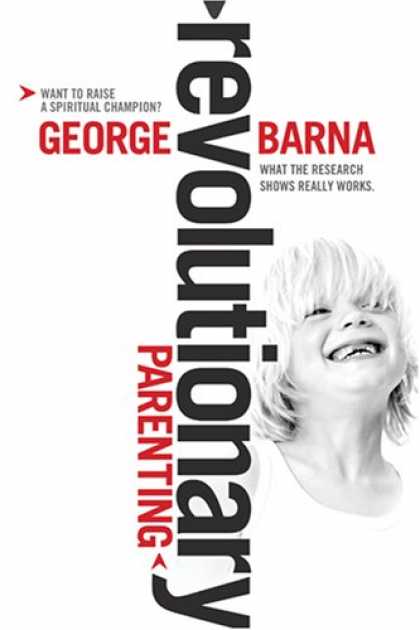
Revolutionary Parenting by George Barna


The cover art and title of this book would make you think that it is somewhat of a sequel to his book, Revolution. But it isn't. It is actually more of a sequel to his book, Think Like Jesus. I think that he just used the titling and cover art (as he did with Pagan Christianity) because the book, Revolution, was groundbreaking and controversial and therefore, popular.


If you'll remember, Think Like Jesus (which I reviewed way back when) used short tests amidst his polls to measure whether people were actual Christians or not - not just whether they gave lip-service to the label of "Christian". Obviously, such a test is practically impossible to give credence to, but it still enables one to sift a bit of the garbage away, so to speak.


Barna, then went further and gave people a slightly longer test to determine whether they had a Biblical worldview or not. He went on to say that those people with a solid Biblical worldview lived lives that were vastly different from those who did not have a Biblical worldview - despite whether or not they claimed to be a Christian.


In Revolutionary Parenting, Barna takes this idea a step further and polls children, teenagers and young adults (20 somethings). He determines which of these children/teens/young adults has a Biblical worldview and then tries to find common threads among the familial culture in which they were raised.


Once again, using his research, Barna is quick to point out that he is only the messenger, and that some of his findings are counter-cultural. This would be where this book ties in with Revolution - as he finds that "parenting that produces spiritual champions is often with little or no help from the Church."


Some of his findings:


  • The lion share of responsibility for raising children falls upon parents, not churches, schools, or daycare workers - no matter how much time children spend in these institutions. The more time parents spend with their children, the more success they have in spiritually shaping them.


  • Parents who put the emphasis on character development rather than academics, sports, arts, or other distractions have the most success.


  • Single parent homes are screwed. Seriously. As he puts it, the research simply shows that if you are a single parent, you are screwed.


  • One-income families are profoundly more successful at raising spiritual champions, despite its counter-cultural position. He says that families that bite the bullet and figure out how to leave one parent at home have a huge statistical advantage - like it or not.


  • Parents who use strong disciplinary measures - strict adherence to threatened punishments, curfews, etc. - have a big advantage despite the counter cultural trends.


  • Parents who pray together (outside of mealtime grace), study the Bible together, and engage in Spiritual discussion together have the major advantage over parents who rely on the Church and Youth Groups to cover this ground.


  • For the 20 odd-years that you are a parent to a child, this responsibility should be your primary responsibility. Not second or third to anything or anyone else.


Basically, the wishy-washy mediocre so-called "Christians" that were outed in Think Like Jesus are breeding and raising wishy-washy mediocre so-called Christians in the next generation.

Tuesday, October 13, 2009

Notre Dame Congregational Study

Was perusing through The Resurgence and ran across these posts about the Notre Dame Congregational Study - a study of modern American churches.

Here are some interesting tidbits.

  • The average church has 150 "affiliated members", but only 77 weekly attenders.

  • The average lead pastor is at a church for only 5 years and is 52 years old.

  • In a typical church, 50% of the attendees stay after the worship service to socialize for a half hour.

  • 65% of churches have a mid-week prayer service, and only 50% have small groups that meet during the week.

Wednesday, August 19, 2009

Mars Hill Church, Seattle - Annual Report


Its weird. I don't go to Mars Hill Church in Seattle. Never been there, in fact. I occasionally check in on their podcasts, occasionally listen to their in-house worship music, and occasionally read their blogs.

But I don't belong to their fellowship, don't invest in their fellowship, and really don't have any plans to do either.

But for some strange reason, I feel a connection and a tie to their endeavors.

Obviously, I like Mark Driscoll as a preacher and an author.

But there is something about the transparency and purposefulness of their church that I find compelling.

Each year, I print out and read through the Mars Hill Church Annual Report. I love it. It gives so much information and inspiration. I don't know why exactly - I think maybe its because it makes me feel like a part of the mission - even when I'm not and have no intention of becoming a part of it.

I've read stories about people moving across the country in order to go to Mars Hill and be a part of its ministry. I appreciate these stories, but I am not wired this way.

I've also read stories about groups of people starting "unofficial" Mars Hill campuses in their own homes in far away parts of the country and the world - once again, I appreciate these stories, but I am not wired that way either.

No. I am happy to sit down with a cup of coffee and read through the Annual Report.

The cover page of the report says, "It's all about Jesus." The report is about 20 pages long. They give some stories of Changed Lives - stories that they run regularly on their website each week about people whose lives have been changed by Jesus.

The report talks about their regional growth, their local growth, and their global growth - missionary training, church planting, campus launches, etc. There are three whole pages on their financial endeavors, both incoming and outgoing. It is really quite detailed.

They talk about their micro missions projects. They also discuss their ministries which reach thousands - websites, technology, etc. They also focus on their discipleship ministries - home groups, bible studies, etc. They have 353 community groups with 3933 participants. They have 39 elders and pastors with 17 more in training. They are very purposeful in both discipleship of leaders as well as the church body as a whole.

They go into great detail about their church planting network. It is with chagrin that I note that they still do not have a church plant south of Orlando - I'd just like to check one out - is that too much to ask. They have planted 173 churches so far - 53 in the past year.

As I said - the report is inspiring. I like that, at this point in the game, Driscoll doesn't have his name plastered all over the report. If you didn't know any better, you'd forget that he was involved at all while reading through the report.

Tuesday, June 30, 2009

But this one disturbs me most......

In Gary Lamb's recent post about his downfall/recovery, there was only one sentence that I found disturbing and upsetting:

I believe with everything that is in me that God is not through with me in a full-time ministry role but I do believe He has me on the sidelines right now to get some things right in my life.

I just don't get it.

There are plenty of men out there who are faithful to their wives. Let's say that 50% of all marriages end in divorce. Let's also hypothesize that 20% of those 50% that stay married cheat on their wives, but still stay married. That would leave us with 30% of men who are able to stay married and faithful. Let's further hypothesize that that 30% is just too generous of a number - let's say, that realistically, only 20% of men could be trusted to remain faithful to their wives.

Now. Shouldn't that 20% be expected to be our leadership? Why are we relying on the other 80% at all?

Of course, naysayers will throw out central themes of the Bible like Fall and Redemption as an excuse for reinstating someone like Gary. But the Bible also has plenty of stories about God calling out those few who show true signs of inward character, rather than those outward signs of exuberance or talent.

I just don't get it.

Is there no such thing as disqualification? Does character matter? Are we that desperate for someone who has talent?

I sometimes wonder how many "true leaders" / aka shepards are being hidden in some of our churches. Or if they are even in church at all?

How often are we trading image and talent for character and obedience?

I've got nothing against Gary for what he's done. I still think he is quite an entertaining character. I agree with Perry Noble, who stated that each of us are only a few missteps from a similar fate.

But I believe that Gary needs to get a real jobby job, like the rest of us. And forget about being a shepard.

He needs to go to church and just enjoy it, like the rest of us.

Monday, June 8, 2009

Pastoral Failure #1,673: Gary Lamb

My mom told me recently of her recent church experience. A few weeks ago, she went to church only to have the two elders of the church get up and read a letter stating that the Senior Pastor of ten years had been removed for indiscretions unbecoming of a pastor.

I think I've become jaded. In fact, I'm sure I've become jaded. In the back of my mind, I've come to expect this of pastors. It has no bearing on them personally, it is just a fact of life. People fail, men especially. Men with egos even more so. Men held up on a pedestal even more so. So I leave that possibility open in my mind, so that, when it happens, it doesn't shake my faith in Jesus, just my faith in men.

My two favorite preachers to listen to, unarguably (Sorry, Dave.) would have to be Mark Driscoll and Gary Lamb. As Driscoll has gotten more and more popular - a world traveller of late - and more successful, I've left that place in my mind open to the possibility of his failure. "When Mark Driscoll falls, I won't be shocked or hurt by it, I'll simply move on, " I tell myself.

So with my eye on Driscoll, it came out of left field for me to read on Gary Lamb's blog this week of his relational/sexual failure which has removed him from his ministry.

Oh well. I'll move on. Of course, I'll pray for those involved, but as I said - I'm jaded.

Wednesday, December 10, 2008

Church Evangelism during Xmas

This week, we received two pieces of mail from two different churches. Both were churches that we visited during our 2007 Church Field Trip Tour. Both pieces of mail are quite different. I'll let you weigh in on the obvious differences.


Solara Church - We received the typical full-color mailer announcing their Special Christmas Services on Dec. 20th and 21st. Nothing special, really. Just a simple invitation to join them for their Christmas services.


New City Church - We received a letter from Pastor Tullian letting us know that their congregation is in dire need of funds as these economic times have not been kind to the church budget. Currently, they are running more than 25% short on their budget on a weekly basis. They don't have a building, so this shortage is due mostly to their staffing costs.

Pastor Tullian says that during the Great Depression, Christians gave 24.2% of their income to the church, while today Christians give about 3.4% to the church. He says that a church of 600 people (with no building) ought to be able to finish the year with a surplus rather than a deficit. He says that most Christians are no different than their worldly counterparts - spending more than they make.

I'd go so far as to say that most Christians probably learned that lesson from their church - spending more than they bring in, and hoping for a year-end miracle. (This isn't the first time I've heard a December financial plea from a church - aiming for those "year-end gifts" that always seem to come - for tax purposes of course.)

Unfortunately, I've also seen churches/ministries "spend-out" at this time of year, so that their budget won't get reduced by a financial board in the new year. Either way, its a bit disheartening.

We don't receive regular pieces of mail from either of these two churches. I just thought it was interesting that these two churches would reach out to us - more than a year later - in such vastly different ways.

Sunday, October 5, 2008

Church - Something is Missing.....

I miss the rag tag bunch of believers that was our last church.

Not all the time.

But sometimes.

The church that we belong to could easily be described as a modern day mega church. Each weekend, more than 4,000 people flock to the campus for a quick, one-hour worship service. Our preacher is now on TV - as well he should be because it suits him and his style of preaching. Our worship team is loud and energetic and as professional as they could be. Our building is outfitted with all the amenities a modern church could need.

But something is missing. Not from our church. But from me.

I notice it when the service is over and the music is fading. It takes less than 4 minutes for 900 people to exit the building and another 5 minutes to exit the premises. If I dally at all with talking to people and socializing, I find myself standing almost alone in the huge auditorium, unless it is between services, in which, it quickly fills back up. There is a coffee bar outside in the courtyard, but I find that it is largely used by the regulars and the people who practically live at the church serving in its various ministries. Everyone else aims for the parking lot.

I miss the rag tag bunch of believers that we had at our last church. That rag tag bunch would have to be kicked out before they'd leave.

Don't get me wrong. We love our church. Pastor David's preaching is creative and easy to follow. He consistently preaches the Gospel for the lost. When my wife was in surgery last month, David was on phone with me while I waited for her to come out of surgery. By the time she got out of surgery, Pastor Scott was standing there with me and my good friend to greet her.

The worship team leads with an energy that is usually unmatched by the crowd of worshippers - something that is quite often lost on me.

But something is missing.

We know plenty of people. We have plenty of friends there. My wife even works there.

But there is a sense of connection on a certain level that we are missing. And I don't have a solution, because, if I did, then it wouldn't be missing.

I just know that, sometimes, I miss our rag tag bunch of believers.

Tuesday, September 9, 2008

A Pastor's Salary

If you're a Senior Pastor at a church in the United States, you're probably making about $81,000 per year. That is the finding of the 2009 Compensation Handbook for Church Staff survey of nearly 5,000 churches and 11,000 employees.

Here's the breakdown: If your church averages 100-300 people, the average pay is around $73,000. If your church has a weekly worship attendance of between 300-500, that number jumps to $88,000. And the salary average for the senior pastor of a church if attendance is 500+ is $103,000 and up.

According to the survey, pastors in the suburbs tend to make as much as 50% more than their rural and urban counterparts.

(ht:MMI)

Friday, May 23, 2008

Does Ministry Fuel Addictive Behavior?

Here is an article by Sally Morganthaler, written last year. Sally is usually known for her take on "Emerging Worship", but in this article, she divulges the story of the downfall of her own husband from his ministry.

Does Ministry Fuel Addictive Behavior?

Here is an excerpt:

"Entrepreneurial church wisdom is that pastors must be visionaries, risk-takers, and innovators, as well as spiritual guides. They are expected to be top-of-the-heap speakers as well, their stage skills honed to the highest cultural standards.

Realistically, very few pastors are cut out for this kind of leadership.

The average pastor may be at his best as teacher, coach, or theological guide. He might shine as a catalyst: a convener of collaborative vision and process; a facilitator of deep community. If he tends toward the empathetic and intuitive, he may excel as a nurturer, counselor, wound-dresser, or heart-holder.

But he is not megachurch material.

Still, he makes the trek each year to the mecca-church of his choice. He takes copious notes in workshops, hoping to find the secret passage to "church success." He leaves these multi-million-dollar facilities with eyes big as saucers, telling himself that he, too, if he tries hard enough, can take his church of 90 or 200 and make it a 2,000-attendee destination point.

And what if he doesn't have the assertive, sole-visionary style? He'll learn it. He'll even fake it. He'll become someone else, invalidate and dismiss his own gifts, his own unique, God-given leadership style and strengths and passions, all in order to emulate the large church pastor he's admired from afar."


Read the entire article.

Sunday, April 27, 2008

Reading through the entire Bible

I've been a Christ-follower since March 29, 1999. I read a lot. And I also spend quite a bit of time studying and reading the Bible. But admittedly, until this year, there were parts of the Bible that I had never read. So last July, I set out to read the entire Bible cover to cover.

You may remember that my father died last June. I took the opportunity to bring back a bunch of his study materials, including an unused Notemaker's Bible (NLT). Last July, I decided to use that Bible to read through the entire thing. The NLT makes for an easy read, and the Notemaker's Bible has plenty of room for writing.

I didn't actually start in Genesis and read through to the end, nor did I use an suggested one-year Bible reading plan. I sort of had my own system for the read-through.

  1. I started reading at Exodus 19 and worked my way through Deuteronomy.

  2. Then I picked up in Luke and read through Revelation, skipping John.

  3. I simultaneously read through the Poetry books while reading the rest of the Bible, because, for me, the Poetry books are the least interesting. Though I do now have greater appreciation for them and there were definitely a few Psalms that really stood out to me.

  4. Having completed most of the New Testament, I went back and read Joshua through Esther.

  5. I then went back and read Matthew and Mark.

  6. Then I read Isaiah through Lamentations.

  7. Then I read John.

  8. I read Hosea through Malachi, quickly realizing that I had never read some of these books.

  9. I saved Ezekiel and Daniel for almost last because of their oft-maligned End-Times content.

  10. Lastly, I finished with Genesis and the first half of Exodus

You may not see it, but there was a method to my madness.

  • I read through the Book of the Law first because I felt that it was the foundation needed to comprehend everything after it. I skipped Genesis and Exodus 1-18 because I felt that I was too familiar with the narrative and I needed to start in more unfamiliar ground.

  • I started in Luke because it is my favorite gospel and it flows right into Acts and the Epistles. (When asked, I always suggest that people start in Luke. It is an easier read than John. Do you really expect a new or non-believer to understand the first paragraph of John?)

  • Reading the History Books is easy and even easier if you've got a timeline handy (its even better if you are able to place the Prophets within that timeline as well.) The History Books have some awesome stories worthy of being made into Rated-R movies that could compete with the likes of Pulp Fiction and The Departed. Seriously folks, there are some intriguing stories in there.

  • Isaiah through Lamentations was good reading, but not easy. I love it when I see Jesus in the Old Testament, though, I get really excited about it.

  • I had actually forgotten that I had skipped John, so it was a breath of fresh air when I realized it. (It was easy to see what I had covered based on the scribbling along the margins and the notes at the bottom of the pages.)

  • Hosea through Malachi was awesome - I know a lot of people who need to read these books. I think that they really speak to our generation. Its all about empty worship - a generation of people that "go through the motions."

  • Ezekiel and Daniel weren't as bad as I'd thought they'd be. Talk about a contrast though, Daniel is continually blessed in an earthly sense, and Ezekiel just gets crapped on over and over again. Literally, at one point God has Ezekiel cooking his food with poop. And that's before he kills his wife as a sermon illustration.

  • I believe that it was fitting to end my reading with the Beginning - Genesis. Genesis is well-trod, easy reading. I didn't want to just read the "easy stuff" first, so I saved Genesis for last.

Where do I go from here? Glad you asked. There were plenty of question marks scribbled throughout the margins; places that I struggled to understand, but I didn't want to get bogged down by beating my head against a wall. Maybe now, I will go back and delve deeper into those question marks. If you are one of my mentors or peers, expect some emails to come your way.

Obviously, one never stops reading and meditating on the Bible, but having been a Christian for almost a decade, it was starting to weigh on me that I had never systematically read through the entire Book. It took me about ten months to read through about 1500 pages. That's about 5 pages a day. Not too bad.

Saturday, January 26, 2008

If at first you don't succeed....

I don't do much ranting, but I do enjoy the occasional rant from others. This one is from Todd at MMI:

Pastor Resigns Amid Allegations

The subtitle of this newspaper story tells it all: “The man who led Shiloh for 14 years was also accused at his last church”. Why, oh why, does this happen over and over in churches all across the country? Why, if a man, who also calls himself a pastor, is accused of sexual misconduct and the evidence is strong, is he allowed to lead another church in another part of the country? Who would hire him, and why? In my past work with Churchstaffing.com, I know that there are literally hundreds of pastors applying for some of the same jobs at any given time. Why would (if you were looking for a pastor) you give a pastor accused of sexual sin a shot at being your pastor? I’m convinced that many churches are unaware of the pastoral candidate’s past (either because of clever hiding of the candidate, the turning of the backs of denominational leaders, or the laziness of not running a background check). But some hire these guys willingly, and then are surprised when the behavior returns. I don’t get it. End of rant.

Saturday, January 12, 2008

Q&A: Oral Sex Virgins, Masturbation, and Pregnant Rape Victims

After giving his sermon on Birth Control, Mark Driscoll opened the floor to Questions from the audience. And they hit him with some difficult, graphic questions. Here is the video of that Q&A session (Rated R):


Or if you want to download the audio or watch it in full-screen hi-def, go here.

Birth Control

This week, Mark Driscoll began his nine-week series where he answers the top nine questions that were asked at askanything.org last year. I'm not going to make a habit of posting his answers, but this sermon was one the most practical, applicable, "real" sermons I've ever heard. I'm so tired of hearing preachers teach on subjects in such a way that they have no real application to my life - especially sex. Warning: this sermon is rated R and if you are easily offended, you will be offended.


If you'd rather download the sermon audio, go here. Sidenote: If you go to Mars Hill's site, you can watch their videos in full screen high definition - quite nice.

Here's the accompanying written notes and resources.

Friday, November 9, 2007

Poll: Southern Baptists Should Not Drink Alcohol

A recent poll by Lifeway Research shows that:

  • 77% of Southern Baptist pastors believe that "Christians should not drink alcohol"


  • 98% of Southern Baptist pastors believe that "drinking alcohol in a public setting can cause others to stumble"


  • 75% of Southern Baptist pastors agreed that "when a Christian does not drink alcohol, this makes non-believers who see this more interested in Jesus Christ"


  • 3% of Southern Baptist pastors admit to drinking alcohol

As a former Southern Baptist pastor, I would have been a part of that 3% that believe that honesty is more important than image.

Thursday, October 25, 2007

Heretics

A beloved friend of mine has become engrossed with a couple of sites that fancy themselves "Heretic Hunters". I waded through these sites and compiled a list of these heretics. After seeing many of the names on the list, I went ahead and added my own name to the list just to be on the safe side. We'll see if I lose any sleep over it. Feel free to submit your own name if you'd like me to add you to the list. The sites are Lighthouse Trails and Apprising Ministries, but I like to call them Load of Crap 1 and Load of Crap 2. The list includes, not only individuals, but also organizations and denominations as well that are labeled as heretical.

It's a bit long, but here's the list of heretics (recognize anyone?):

Alpha Course
Rick Warren
Awana
Bruce Wilkinson
Youth Specialties
Brennan Manning
Rob Bell
The Pope
Catholicism
Brian Mclaren
Dan Kimball
Tony Jones
Erwin McManus
Mark Driscoll
Zondervan
Doug Pagitt
Bill Hybels
Moody Bible Institute
Eugene Peterson
Bob Coy
David Crowder
Billy Graham
Mennonites
Beth Moore
Max Lucado
Donald Miller
Tony Campolo
Campus Crusade
Michael W. Smith
Newsboys
Jeremy Camp
Delirious
Phil Keagy
Rich Mullins
Baylor University
J.K. Rowling
Tim Lahaye
Chuck Swindoll
David Jeremiah
Kay Arthur
World Vision
Leonard Sweet
Phillip Yancey
Josh McDowell
Luis Palua
Greg Laurie
NavPress
Intervarsity
Christianity Today
Relevant Magazine
Lutherans
Episcopalians
American Baptists
Presbyterians
Methodists
Women of Faith
Oprah Winfrey
Emerging Church Movement
Emergent Church Village
Joel Osteen
T.D. Jakes
Ed Young Jr.
Southern Baptist Convention
Lifeway Stores
Mother Theresa
Quakers
TBN
Bono of U2
N.T. Wright
“Christ-Followers”
Rick Mckinley
Craig Groeschel
Andy Stanley
Mark Beeson
Lew Graff
Chris G.
Ryan C.
Matt E.
Matt B.
Fred U.
Shane B.


Tuesday, October 16, 2007

State of the Pulpit - Mark Driscoll on Joel Osteen

Mark Driscoll is on a roll lately. At the Convergent Conference last month, he pretty much "called out" Brian McLaren, Rob Bell, and Doug Pagitt on their faulty theology.

Last week, at his own church, he treated the congregation to 3.5 minutes of Joel Osteen, and then spent 5 minutes critiquing the clip.

Sunday, September 23, 2007

Four Recent Interviews on the Emerging Church

In reference to my recent review of the book Truth War, here are a few articles that were published this month.

Here's the John MacArthur interview in Answers Magazine.

Here's the Mark Driscoll interview in Christianity Today.

The Rob Bell Interview by Wittenburg Door.

The Brian McLaren interview by Wittenburg Door.

Good luck making sense of McLaren. Most of what comes out of his mouth is complete nonsense.

I love that Mark Driscoll takes criticism like it is a compliment. I can appreciate that. When someone tells me that I'm "flippant", it simply means that I am not a "people-pleaser."

Todd Rhoades, over at Monday Morning Insight, compared John MacArthur to the Soup Nazi. I think that that comparison is simply brilliant. He loves the soup (scripture). He is a master of making soup (exegeting scripture). But he has no love for people.

Saturday, September 22, 2007

Satan's Sex Ed.

Here are two of the videos shown during the Satan's Sex Ed Series at Lifechurch.tv. I can imagine that there are a lot of churches where this just would not fly at all.

These are really funny.


Template Designed by Douglas Bowman - Updated to Beta by: Blogger Team
Modified for 3-Column Layout by Hoctro