Showing posts with label books. Show all posts

Friday, March 19, 2010

The Omnivore's Dilemma by Michael Pollan


If Food Inc. was the 90 minute encapsulated story of our corrupt modern day food system, then this book, The Omnivore's Dilemma, is the six part mini-series.


This was a great read. I'm really liking this author right now. He isn't too much of a nut job, more of a recent convert. I actually watched Oprah last week because he was going to be on the program - I've never seen her show before.


He basically lays out his own journey of self discovery and revelation concerning the meat industry, the poultry industry, farming, chemical farming, corn subsidies, sustainable living, the hypocrisy of the "organic industry" - I'm looking at you, Whole Foods, etc.


He tells firsthand, about his forays into these areas and the eye-opening results. He explains that, somehow, killing the chickens and shooting a wild pig himself, made him appreciate their sacrifice when he later sat down to eat them.


Pollan lays bare the deceptive labeling practices in the food industry, especially the "organic" foods.


I have to say that this book actually created more questions than answers. And the author readily acknowledges this problem at the conclusion of the book. Once again, its not a matter of becoming completely sustainable - a near impossibility in our modern day food economy. Its simply a matter of taking small steps to move closer towards a sustainable lifestyle.


This book was a quick read - I think I tore through it in less than 48 hours. I'm now convinced that his other two books - In Defense of Food, and Food Rules - have become must-reads if I can get my hands on them.

Friday, January 8, 2010

Religion Saves by Mark Driscoll


Way back when, Mark Driscoll decided that he was going to base a sermon series on the questions put forth by thousands of internet denizens. He called the series, Religion Saves: and 9 other Myths. I mentioned it in my Ask Anything Post. He claimed that much of Paul's Epistles were done in the same vein - answering questions that the Church was struggling with - like, "If I sleep with my stepmom, is that bad?" (I Corinthians)


It was during this preaching series that Driscoll began taking questions from the audience during the sermon (Oral Sex Virgins, Masturbation, and Pregnant Rape Victims) . They would text in their question and he would respond to some of them after the conclusion of the sermon. He has since continued this practice.


In the book, Driscoll devotes a chapter to each of the questions that were highlighted in the series.

1.Birth Control


2. Humor


3. Predestination


4. Grace


5. Sexual Sin


6. Faith and Works


7. Dating


8. The Emerging Church


9. The Regulative Principle

I'm not a huge fan of reading a book that is based on a sermon series I've already heard, but the truth is, I'd rather read a rehash books of Driscoll's than most of the other books out there.

Monday, January 4, 2010

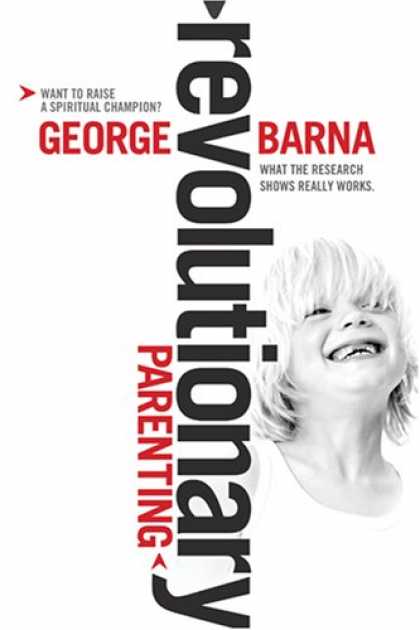
Revolutionary Parenting by George Barna


The cover art and title of this book would make you think that it is somewhat of a sequel to his book, Revolution. But it isn't. It is actually more of a sequel to his book, Think Like Jesus. I think that he just used the titling and cover art (as he did with Pagan Christianity) because the book, Revolution, was groundbreaking and controversial and therefore, popular.


If you'll remember, Think Like Jesus (which I reviewed way back when) used short tests amidst his polls to measure whether people were actual Christians or not - not just whether they gave lip-service to the label of "Christian". Obviously, such a test is practically impossible to give credence to, but it still enables one to sift a bit of the garbage away, so to speak.


Barna, then went further and gave people a slightly longer test to determine whether they had a Biblical worldview or not. He went on to say that those people with a solid Biblical worldview lived lives that were vastly different from those who did not have a Biblical worldview - despite whether or not they claimed to be a Christian.


In Revolutionary Parenting, Barna takes this idea a step further and polls children, teenagers and young adults (20 somethings). He determines which of these children/teens/young adults has a Biblical worldview and then tries to find common threads among the familial culture in which they were raised.


Once again, using his research, Barna is quick to point out that he is only the messenger, and that some of his findings are counter-cultural. This would be where this book ties in with Revolution - as he finds that "parenting that produces spiritual champions is often with little or no help from the Church."


Some of his findings:


  • The lion share of responsibility for raising children falls upon parents, not churches, schools, or daycare workers - no matter how much time children spend in these institutions. The more time parents spend with their children, the more success they have in spiritually shaping them.


  • Parents who put the emphasis on character development rather than academics, sports, arts, or other distractions have the most success.


  • Single parent homes are screwed. Seriously. As he puts it, the research simply shows that if you are a single parent, you are screwed.


  • One-income families are profoundly more successful at raising spiritual champions, despite its counter-cultural position. He says that families that bite the bullet and figure out how to leave one parent at home have a huge statistical advantage - like it or not.


  • Parents who use strong disciplinary measures - strict adherence to threatened punishments, curfews, etc. - have a big advantage despite the counter cultural trends.


  • Parents who pray together (outside of mealtime grace), study the Bible together, and engage in Spiritual discussion together have the major advantage over parents who rely on the Church and Youth Groups to cover this ground.


  • For the 20 odd-years that you are a parent to a child, this responsibility should be your primary responsibility. Not second or third to anything or anyone else.


Basically, the wishy-washy mediocre so-called "Christians" that were outed in Think Like Jesus are breeding and raising wishy-washy mediocre so-called Christians in the next generation.

Friday, January 1, 2010

All I Want for Xmas is........ Books.

My wife asked me back in November for any Xmas requests. I gave her my Amazon.com wish list. I've been adding to it for a couple years now. I haven't bought any books lately because of a lack of time and a lack of funds. So the list has grown to almost a dozen books.

To be honest, I haven't done much extra-Biblical reading lately. That is probably a good thing, as most of the books out there are probably drivel - especially the books written for those in ecclesiastical leadership. Even if I'm no longer in the role of a pastor, those are probably the books I'd read anyways.

With a lack of new books to read, I've recently revisited those few books which have been most influential on me. Three to be exact.

Radical Reformission - by Mark Driscoll
Revolution - by George Barna
Confessions of a Reformission Rev. - by Mark Driscoll

Radical Reformission showed me the kind of Christian that I wanted to be - or was meant to be.
Confessions showed me the type of Pastor I'd most likely be were I given the chance to lead others spiritually.
And Revolution showed me that there is indeed life outside of the church bubble, a life of faith and Christian Living. I've been lax to mention this book too much for fear that its namesake might misconstrue certain motivations behind the namesake of this blog. NO, THIS BLOG ISN'T ABOUT LEAVING THE CHURCH BEHIND AND STARTING OUT ON A MISSIONAL HOUSE CHURCH LIFESTYLE FORSAKING ORGANIZED RELIGION.

Nonetheless, the book did indeed have a profound impact on me and still does to this day. Barna has a unique way of using his "research" (he is the premier pollster of religious matters in the U.S.) to necessitate the writing of his books. In other words, he argues that the statistics speak for themselves - and he is just the messenger of the story that those statistics tell. In the case of Revolution, the story (and the statistics) tell of a sub culture of Christians who have left and are leaving the Church in order to pursue a vibrant, active, healthy Christian lifestyle on their own.

Because of this, two Barna books were on my list - Pagan Christianity and Revolutionary Parenting. Pagan Christianity is a book he authored with Frank Viola about the Pagan roots of what we call the "modern church" Pagan roots of: preaching, worship, buildings, pastors, ordered worship, church business practices and models, etc. It is an incendiary book that goes a little too far into the rabbit hole of "the Organized Church is putting a stranglehold on the modern Christian which makes a healthy relationship with Jesus almost an impossibility." Nonetheless, I'd like to read Pagan Christianity, and I have read parts of it while sitting in Borders.

Revolutionary Parenting is a book that I actually received from my wife (thank you very much) and I will devote a subsequent post to it's review. Being a new parent, and a fan of the book, Revolution, I thought it would be an appropriate read at this juncture.

Driscoll's first two books were groundbreaking for me. Radical influenced me as a Christian, and Confessions influenced me as a pastor. Having been out of a leadership role, spiritually, for some time, Confessions doesn't hold the same grip on me as it did - neither does any other ecclesiastical book for that matter. When you're not in the thick of it, what's the point in reading about it?

I think I've read Radical Reformission at least half a dozen times by now. Surely a record for me. I've reread favorite books from time to time, but none of them that many times for sure. This book is what turned me on to Driscoll in the first place. He thinks like I think. He talks like I talk. Just about everything he says connects with me in some way - even when I disagree with him, or especially when he is convicting me of sin and making me feel bad about it - which Driscoll does quite often, especially in his preaching. Let's face it, as a man, a father, and a husband - I AM A PATHETIC FAILURE. And Driscoll specializes in showing men when they are Pathetic Failures. So this hits home with me quite often.

I've neglected to purchase any of Driscoll's subsequent books for a few reasons:

  1. He's become an internationally popular preacher/pastor. He could write a book about pooping, get it published, and sell thousands. Just because he starts putting out a bunch of books, doesn't mean that they'll have the impact of those first two.
  2. He has basically been publishing book versions of his Sermon Series - admittedly. I've already listened to the sermons, do I really need to read the book too? Is this just a ploy to capitalize on his popularity?
  3. Most authors, like musicians, proceed to push out more of the same, never offering something new or worthwhile. This is one of the reasons I like Rick Warren. Having written Purpose Driven Church and Purpose Driven Life, he really hasn't written anything since. I like that about him. He could have easily made millions by writing subsequent books like Purpose Driven Potato Salad, Purpose Driven Parenting, and Purpose Driven Ping Pong. But he didn't.

Driscoll's language, interpretation, and way of thinking appeal to me so much, though, that I couldn't stay away from his books forever. So I added them to my wish list.

And my wife got me one for Xmas - Religion Saves. I will also post my review of that book as well.

I know that I haven't written much lately - too busy, too distracted, too whatever. Maybe that will change. Maybe not. Either way, I'm making up for it this New Year's Eve. Unloading on my trusty blog all that is weighing me down.

Monday, March 23, 2009

Fieldy: 2nd Korn member to be Born Again

Fieldy, the bassist for Korn, is now the second member of the band to become a Christ Follower. His book, Got the Life, came out this month - describing his conversion.


Fieldy is the reason that I took up playing the bass guitar. And I would be remiss if I didn't say that Korn was probably the most important band in my musical upbringing. Its weird that two of the five of them are now Christians. Now, if only Kid Rock could give up the strippers and find Jesus, I'd be set.


Here is an excerpt of an article about Fieldy's conversion:


When one his oldest friends, Korn guitarist Brian "Head" Welch, quit the band after finding religion, Fieldy scoffed.
He didn't listen when his father became terminally ill, and urged his boy one last time to give the Bible a shot.
But the night of the funeral, as his entourage kicked off its usual party, for once Fieldy didn't feel like throwing back beer after beer. Instead he found himself praying, asking for what he thought his father would have wanted: for Jesus to help him end the endless party.
The next morning, he flushed his pot down the toilet and says he never looked back, skipping rehab for religion in a single move.
"I didn't grow up with any of that, with prayer," he says of his first steps into Christianity. "I just opened my heart and said, 'I need help doing this.'"
He started to read the Bible. But, like many others, he also found his way to "The Purpose-Driven Life," the book that helped make Rick Warren, pastor of Saddleback Church, a national religious figure.
It was just a start. Though he had ideas to live a certain way, Fieldy – unlike his former bandmate Head – was seeking faith while still playing bass and otherwise performing with one of the biggest hard-rock acts in the world, Korn.
"When I made my change, I was thrown back into the pit of hell, on tour," he says. "There are dark things out there. And just because my band isn't partying" – Korn's core members all are sober now, he says – "doesn't mean it's not around you."
On tour, he says, he traded night for day. For the first time in years, he got up during the day on tour to sightsee in cities where he'd previously seen only the insides of arenas, hotels and strip clubs.
When temptations came near – and in that world temptation is a 24-hour business – Fieldy says he walked away.
The fridge outside his studio stocks Smartwater and Rockstar energy drinks, not wall-to-wall Coors Light as it once did.
On this day, Fieldy's 2-year-old son, Israel, plays upstairs, in the family room. Dena – who agreed to marry him even after he confessed all his sins against her – hangs out in the kitchen. Fieldy is just back from work; Korn is spending time in a Los Angeles studio, working on new songs, and Fieldy is able to stay at home. Every other weekend, Fieldy's daughters from an earlier marriage, Olivia, 10, and Sarina, 11, stay with him.
It's a common Orange County life – Dad at work, a blended family, financial comfort. But, Fieldy says, it takes him some extra work to stay right with God, and keep all this goodness around him. The Bible, he says, has replaced his bong as a way to start each day.
"It's like my morning workout. Start the day with something good, something uplifting.
"I'm in the book of Samuel right now, and it's so crazy!" Fieldy says, the rocker seeing a bit of heavy metal in the old epic tales. "People don't realize how dark and gory it is, but the whole story behind it is love. It's a trip how twisted up it is."
He hopes his own book, which he named after one of Korn's biggest hits, will reach people who might not otherwise be open to hearing about faith.
"I'd really like to reach people who look like myself," Fieldy says as he poses for a photographer with Israel in his heavily inked arms. "You never know, but the majority of the people (who read it), I hope they take the route I took.
"Maybe this can be that little bit of a seed I can plant out there."

Thursday, October 16, 2008

Porn Again Christian: Table of Contents

Just so you can get an idea of the way that Driscoll tackles the subjects of Pornography and Masturbation, here is the Table of Contents for this small booklet. (FYI, "toilet water"is Driscoll's analogy for pornography - i.e., men drinking from the toilet of sexual lust.)


Table of Contents:
Introduction
Chapter 1 - A Tall Glass of Toilet Water
Chapter 2 - The Fear of the Lord
Chapter 3 - A Theology of Pornographic Lust
Chapter 4 - A Practical Theology of Pornographic Lust
Chapter 5 - Masturbation
Practical and Theological Reasons to Not Masturbate
Practical and Theological Reasons to Masturbate
Chapter 6 - Manly Men
Chapter 7 - coming October 17th Answers to Common Questions
Chapter 8 - coming October 20th Pornography and the Slippery Slope of Ted Bundy
Chapter 9 - coming October 22nd Final Word to Military Men and Men Who Like Prostitutes
Chapter 10 - coming October 24th Sex Slavery
How Are Women Procured?
“Breaking” the Women
Chapter 11 - coming October 27th Organized Crime and Corruption
Chapter 12 - coming October 29th U.S. Military and Prostitution
Chapter 13 - coming October 30th Most Prostitution is Slavery
Chapter 14 - coming November 11th Conclusion

Thursday, May 1, 2008

The Dip - Knowing When to Quit


I saw this book on a couple of reading lists, and the sub-title grabbed me, "A little book that teaches you when to quit." Honestly, I didn't expect the book to be so short and small. It took me about 20 minutes to read it, and I think it took Seth Godin about 30 minutes to write it. If I were you, I wouldn't bother. If you want to read a small, short book, try "Everything I ever needed to know, I learned in Kindergarten" or something of that nature.

Sunday, April 27, 2008

Reading through the entire Bible

I've been a Christ-follower since March 29, 1999. I read a lot. And I also spend quite a bit of time studying and reading the Bible. But admittedly, until this year, there were parts of the Bible that I had never read. So last July, I set out to read the entire Bible cover to cover.

You may remember that my father died last June. I took the opportunity to bring back a bunch of his study materials, including an unused Notemaker's Bible (NLT). Last July, I decided to use that Bible to read through the entire thing. The NLT makes for an easy read, and the Notemaker's Bible has plenty of room for writing.

I didn't actually start in Genesis and read through to the end, nor did I use an suggested one-year Bible reading plan. I sort of had my own system for the read-through.

  1. I started reading at Exodus 19 and worked my way through Deuteronomy.

  2. Then I picked up in Luke and read through Revelation, skipping John.

  3. I simultaneously read through the Poetry books while reading the rest of the Bible, because, for me, the Poetry books are the least interesting. Though I do now have greater appreciation for them and there were definitely a few Psalms that really stood out to me.

  4. Having completed most of the New Testament, I went back and read Joshua through Esther.

  5. I then went back and read Matthew and Mark.

  6. Then I read Isaiah through Lamentations.

  7. Then I read John.

  8. I read Hosea through Malachi, quickly realizing that I had never read some of these books.

  9. I saved Ezekiel and Daniel for almost last because of their oft-maligned End-Times content.

  10. Lastly, I finished with Genesis and the first half of Exodus

You may not see it, but there was a method to my madness.

  • I read through the Book of the Law first because I felt that it was the foundation needed to comprehend everything after it. I skipped Genesis and Exodus 1-18 because I felt that I was too familiar with the narrative and I needed to start in more unfamiliar ground.

  • I started in Luke because it is my favorite gospel and it flows right into Acts and the Epistles. (When asked, I always suggest that people start in Luke. It is an easier read than John. Do you really expect a new or non-believer to understand the first paragraph of John?)

  • Reading the History Books is easy and even easier if you've got a timeline handy (its even better if you are able to place the Prophets within that timeline as well.) The History Books have some awesome stories worthy of being made into Rated-R movies that could compete with the likes of Pulp Fiction and The Departed. Seriously folks, there are some intriguing stories in there.

  • Isaiah through Lamentations was good reading, but not easy. I love it when I see Jesus in the Old Testament, though, I get really excited about it.

  • I had actually forgotten that I had skipped John, so it was a breath of fresh air when I realized it. (It was easy to see what I had covered based on the scribbling along the margins and the notes at the bottom of the pages.)

  • Hosea through Malachi was awesome - I know a lot of people who need to read these books. I think that they really speak to our generation. Its all about empty worship - a generation of people that "go through the motions."

  • Ezekiel and Daniel weren't as bad as I'd thought they'd be. Talk about a contrast though, Daniel is continually blessed in an earthly sense, and Ezekiel just gets crapped on over and over again. Literally, at one point God has Ezekiel cooking his food with poop. And that's before he kills his wife as a sermon illustration.

  • I believe that it was fitting to end my reading with the Beginning - Genesis. Genesis is well-trod, easy reading. I didn't want to just read the "easy stuff" first, so I saved Genesis for last.

Where do I go from here? Glad you asked. There were plenty of question marks scribbled throughout the margins; places that I struggled to understand, but I didn't want to get bogged down by beating my head against a wall. Maybe now, I will go back and delve deeper into those question marks. If you are one of my mentors or peers, expect some emails to come your way.

Obviously, one never stops reading and meditating on the Bible, but having been a Christian for almost a decade, it was starting to weigh on me that I had never systematically read through the entire Book. It took me about ten months to read through about 1500 pages. That's about 5 pages a day. Not too bad.

Sunday, November 25, 2007

Giving:How Each of Us Can Change the World


I wouldn't normally bother to read a book by a president, but President Bill Clinton's book Giving, caught my eye on the bookshelf. I liked the title. I was well pleased with this book. It doesn't serve as motivation or inspiration so much as it serves as an excellent resource for giving. Here is the way President Clinton breaks it down (I've included a small handful of the websites that he endorses as well):

Giving Money

one.org
kiva.org
charitynavigator.org


Giving Time

habitat.org
covenanthouse.org
wish.org
volunteermatch.org

Giving Things

samaritanspurse.org
givingworks.ebay.com
worldvision.org

Giving Skills

acorn.org

bgca.org

childrensfellowship.org

For each area, he tells an inspirational story of someone who stepped out of their comfort zone and took risks in order to help their fellow man. He also goes into great detail listing and describing those organizations that are trustworthy and successful in each area. Even if you did not care to read this book, you could still use his website for the resources on giving.

His conclusion towards the end of the book:

"Why don't people give? I think the reasons are simple.
  • They don't believe what they could do would make a difference, either because their resources are limited or they're convinced efforts to change other people's lives and conditions are futile.
  • They don't feel morally obligated to give.

  • No one has ever asked them to give.
  • They believe that they'll enjoy life more if they keep their money and time for themselves and their families."

Saturday, November 17, 2007

Irresistible Revolution - Shane Claiborne

When I read Radical Reformission: How to reach out without selling out by Mark Driscoll last year, it really jacked me up. Since I had become a Christian, I had been taught that I needed to squeeze into a certain mold in order to be found acceptable. Driscoll taught me that I could keep my unique personality intact while following Jesus. He also convicted me of loving Jesus but not loving people, especially people who do not know Jesus. That book messed me up so bad that I had to re-read it at least 3 times in order to fully understand how my life would change as a result of "reaching out without selling out."


Shane Claiborne's Irresistible Revolution: living as an ordinary radical holds the potential to do almost as much damage to my life for the cause of Jesus. For more information about Shane, go to the Simple Way, the semi-homeless community in which he lives. I am going to simply say, "Read this book." And I am going to list some notable excerpts here:

"Some of us haven't even asked the right questions, or found a church that would let us."

"I had become a believer, but I had no idea what it meant to be a follower. People had taught me what Christians believe, but no one had told me how Christians live."

"We decided to stop complaining about the church we saw, and we set our hearts on becoming the church we dreamed of."

Quoting Soren Kierkegaard, 'The matter is quite simple. The Bible is very easy to understand. But we Christians are a bunch of scheming swindlers. We pretend to be unable to understand it because we know very well that the minute we understand, we are obliged to act accordingly. 'My God', you will say, 'if I do that my whole life will be ruined. How would I ever get on in the world'?'"

Quoting the late Rich Mullins, "You guys are into that born again thing, which is great. We do need to be born again, since Jesus said that to a guy named Nicodemus. But if you tell me I have to be born again to enter the kingdom of God, I can tell you that you have to sell everything you have and give it to the poor, because Jesus said that to one guy too. But I guess that's why God invented highlighters, so we can highlight the parts we like and ignore the rest."

"That doesn't mean rich people are excluded or not welcome. It means that it is nearly impossible for them to catch the vision of interdependent community, dependent on God and one another. Rich folks, while they may be starving for God and community, still believe the illusion that they are self-sufficient autonomous individuals, and that belief is incompatible with the gospel."

"I'm not sure we need more churches. What we really need is 'a church'. I have tried to remove the plural form 'churches' from my vocabulary, training myself to think of the church as Christ did, and as the early Christians did."

On his experience in Iraq, "I was shocked to find so many Christians in Iraq. I was floored by my ignorance and by the ancient roots of my faith. This was the land of my ancestors. Christianity was not invented in America....how about that?"

"Sometimes people ask me if I am scared, living in the inner city. I usually reply, 'I'm more scared of the suburbs.' While the ghettos may have their share of violence and crime, the suburbs are the home of the more subtle demonic forces - numbness, complacency, comfort - and it is these that can eat away at our souls."

"The higher a person's frequency of church attendance, the more likely they are to be sexist, racist, anti-gay, pro-military, and committed to their local church."

"The pervasive myth is that as a church grows larger, it can do more good. As congregations grow in terms of staff and property, their giving to causes outside of operating expenses decreases dramatically, especially money given directly to the poor. Rich people are significantly less generous than poor people proportionately, and large congregations give proportionately far less to people in poverty than do small ones. In fact, they rarely even have poor people among them."

Claiborne concludes the book with a four-page list of organizations (also available on the Simple Way website) that are looking to revolutionize the church through social action.

Tuesday, November 6, 2007

This Beautiful Mess

Pastor Rick Mckinley sent me his book so that I could review it here on revolutionfl.com. Hands down, Rick is one of my favorite preachers. He is the pastor of Imago Dei in Portland. I like listening to Rick because he takes me outside of my comfort zone with his social/green outlook on christian living.

I was not disappointed with this book. I tore through it in about 3 days. Much like his preaching, there were parts that hit directly home with me and there were also parts that took a step outside of my comfort zone. I'll admit that sometimes he loses me with his language and perspective, but that is a good thing. Like I said, it stretches me.

I went crazy with my highlighter and pen on this book and I will definitely be rereading it at some point.

Here are some excerpts that jumped off of the page at me:


  • "You can study God expertly in his parts and miss Him entirely in his being."

  • "When you observe what passes for American Christianity - in politics, on T.V., in churches, - don't you sometimes find yourself saying, 'I don't want to join that team'?"

  • "Relevance happens when we choose to be real people caring for other real people. Authentic relationships make us relevant. You don't have to work at being relevant because love given without any agenda is always relevant."

  • "The American Church doesn't produce martyrs, we produce celebrities."

Also, towards the end of the book, he discusses the viewpoints that he has gathered from having christian friends around the world. These people often look on us "rich American Christians" with pity and concern, and prayer. Compared to much of the world, we are like spoiled millionaires. Don't believe me, check the Global Rich List. Now, given what the Bible has to say about being rich and being a Christ-follower, what does that have to say about our plight? Spiritually speaking, who is better off? Someone in a third world country with almost no material possessions relying completely upon God's providence or someone living in America worried about which (insert material possession here) to purchase next. How ironic that it is them praying for us, worrying about us, feeling sorry for us.

I'm now determined to read his first book, Jesus in the Margins. Thanks for the book, Rick. It's a keeper. Now if I could just get all of the authors on my wish list to send me their books pro-bono.

Wednesday, October 24, 2007

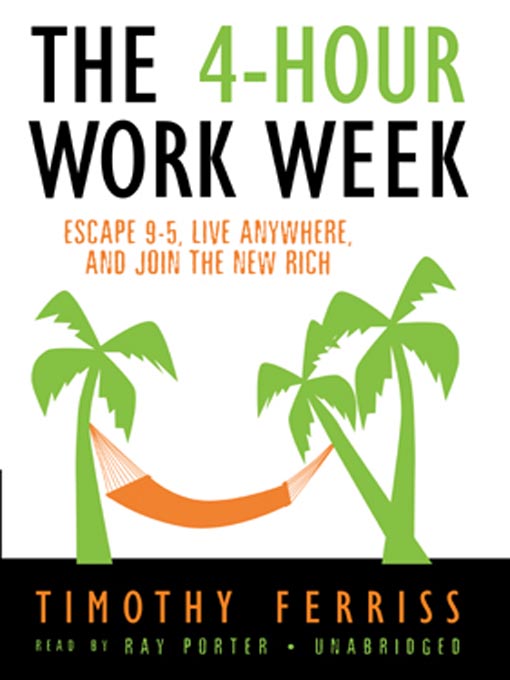
The 4-Hour Workweek

I heard Tim Ferris, the 29 year old author, give an interview on Paul and Young Ron recently and my interest was piqued. Surprisingly, this book was really great! I don't usually go for "business/self-help/travel/get-rich/time management" books, but this one had many redeeming qualities. There are quite a few useful tidbits that I will take away from this book, not the least of which is speed-reading.

That said, I should also point out that Ferris and I don't always see eye to eye. My Christian, pastoral, family, dog-loving, South Florida lifestyle doesn't lend itself easily to the lifestyle that he prescribes in his book. Nonetheless, there were many small pieces of advice that he gives which I find to be invaluable, especially coming from a 29 year old vagabond.

Here are some excerpts that really jumped out at me:

  • Tim "cheats the system" and becomes the Chinese National Champion in Kickboxing by pushing his opponents off of the platform for TKO's. In this illustration, he shows not only his genius, but also his complete lack of morals and respect for their sport.
  • Some of Tim's best stories are about other people. Like Jean-Marc, who was stranded in Ghana (West Africa) for four months surviving on a mush-like concoction of corn meal and spinach. "The most basic of foods and good friends proved to be the only real necessities, giving him the most life-affirming epiphany: The worst really isn't that bad. To enjoy life, you don't need fancy nonsense."
  • "I hope you're sitting down. I'm going to tell you something that upsets a lot of people. I never watch the news and I don't read the newspaper. I cultivate selective ignorance for my own good. I read the headlines through the newspaper machines and nothing more."
  • He teaches you how to read 200% faster in less than 10 minutes. I'm already somewhat of a speedreader, but this was the first time I'd seen anyone lay it out so simply and so quickly.
  • He identifies time wasters and shows you how to ease them out of your system: television, reading and watching the news, all non-fiction reading and most fiction reading, email, internet, etc. You see where this is going yet?
  • He tells great stories about the wonders of global outsourcing and currency exchanges. I won't go into detail here, but it is pretty crazy what can be done in our new global economy.
  • The criticism sandwich was a great illustration that I'd never heard before: first, you praise a person for something, then you deliver the criticism, and then close with a topic-shifting praise to exit the sensitive topic.
  • "I have quit three jobs and been fired from all the rest. Getting fired, despite sometimes coming as a surprise and leaving you scrambling to recover, is often a Godsend: Someone else makes the decision for you, and it's impossible to sit in the wrong job for the rest of your life. Most people aren't lucky enough to get fired and die a slow spiritual death over 30-40 years."
  • He tells the story of the rich, successful, Harvard M.B.A. American and the Mexican fisherman who "sleeps late, fishes a little, plays with his children, takes siestas with his wife, and strolls into the village every evening to sip wine and play guitar with his friends." Who is better off - the rich American or the well-rested fisherman?
  • "Whether you're aware of it or not, material possessions create indecision and distractions, consuming attention and making unfettered happiness a real chore. It is impossible to realize how distracting all this crap is until you get rid of it."
Unfortunately, if I take Tim's advice, I'll be spending a lot less time on the internet as well as a lot less time reading. (With the exception of my Bible, of course). We'll see.

Friday, September 28, 2007

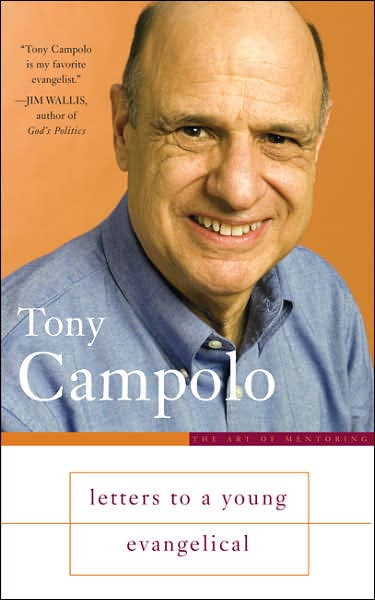
Letters to a Young Evangelical

Let me start by saying that Mr. Campolo (sorry, Rev. Dr. Campolo) lost all credibility with me halfway through the book when he discussed the fact that he and his wife belong to separate churches. She belongs to a church that affirms homosexuality, while he belongs to a nearby church that does not affirm homosexuality. It just goes to show that anyone can write a book and get it published, it just takes a sucker like me to read it. (At least I didn't pay for it, thank you public library.)

I'm sorry, but if you can't even manage to go to the same church as your wife, then you have no business teaching me anything about anything, let alone trying to give an overview of the current cultural, political, theological, and ecclesiastical landscape.

It's amazing to me that some of these authors (Leonard Sweet comes to mind) are encouraged to write at all, let alone paid for it.

The topics that Campolo discusses in this book are great topics that I am indeed interested in: fundamentalism, Pentecostalism, women's roles, homosexuality, abortion, conservative politics, southern baptists, Biblical inerrancy, etc. These are great topics, hot-buttons even; but their relevance is ruined by this man's stupidity. Here is a classic case of a man who needs to stop trying to inform others, and get a handle on his own life first.

Here's the deal:

I'll tell you when I read a book that is a really great book, but has some conclusions that I disagree with - "Velvet Elvis" by Rob Bell.

Likewise, I'll tell you when I read a book that is just a complete waste of time whether I agree with its premise or not - "Sex/God" by Rob Bell, just about anything by Leonard Sweet, as well as this book, by the Rev. Dr. Campolo.

Here's an excerpt from the book:


My wife would ask, "Don't you think it's hypocritical for you to accept into the church, and even ordain to the ministry, persons who have been divorced and remarried, but to turn around and forbid gay marriage? How can you accept marriages that Jesus specifically condemns, and then turn around and oppose marriages Jesus never even mentions?" My only response is that the prohibitions against homosexual eroticism were so prevalent in His time that Jesus saw no need to talk about the obvious. But my wife doesn't buy that argument.

Language of the Emerging Church

This would be the only book by Leonard Sweet that I've actually enjoyed, A is for Abductive - The Languag of the Emerging Church. It is actually co-authored by Brian McLaren, though I don't have much interest in reading any of McLaren's other books, popular as they may be.

This isn't so much a book as it is a dictionary of terms related to the "postmodern emerging church movement", and a useful one at that.

Much of this book is total crap, as Mr. Sweet has shown in his other works that he has a penchant for making up words and phrases and has a field day with a "dictionary of terms." You could go crazy trying to wrap your mind around these entries: Cyborg, Double Ring, Eschaton, Fractals, Helix, Holarchy, J-Factor, Matrix, Robitis, String Theory, Xenophilia, Zending.

Despite Sweet, this book was useful and will be helpful in the future also. Of particular note was the entry on Deconstruction. This entry pretty much sums up the entire book and the emergent church, at least from the viewpoint of McLaren and Sweet. I understand deconstruction/post-modernism, but I have a hard time buying it, because I'm not much of a conspiracy theorist. I'm not very prone to thinking that I've been "duped" by everyone and everything around me. The major blunder of this book for me, was comparing the emerging church movement to "The Truman Show" and "The Matrix", thereby implying that everything around us is one big lie. Sorry, I may be a disgruntled child of the grunge era, circa 1993, but I'm not paranoid enough to go jumping down the rabbit hole.

Monday, September 24, 2007

God is not Great - How Religion Poisons Everything

Before I begin to review this best-selling book by Christopher Hitchens, I need to first explain to you Occam's Razor. Occam's Razor is a philosophical principle from the 14th century that is often paraphrased as "All things being equal, the simplest solution tends to be the right one."


There, I've saved you from having to go out and purchase this book by Mr. Hitchens. The author relies so heavily and references so often this 600 year old principle, put to paper by a monk, that his book really should be titled, Occam's Razor: Religion Poisons Everything. Ah, but that book just wouldn't sell now would it. I have to admit myself that the title "God is not Great" really did jump out at me from the shelf at Target.

There are glaring differences between this book and the last book I read, The God Delusion. Richard Dawkins fancies himself a scientist, while Hitchens fancies himself a journalist. Hitchens' book reads more like an editorial in the back of the paper. It is a 300 page rant, sometimes dipping down to a level of pure childishness. I guess it was just a little disappointing after having read Dawkins' book, which was simply a better piece of writing.

If you wanted to read both books, I'd say be my guest, though it might be a bit redundant. But if you were only going to read one, then I would definitely recommend The God Delusion.

I'm still waiting to receive Letter to a Christian Nation by Sam Harris.

Friday, September 21, 2007

CHAZOWN

I like Craig Groeschel. I like the concept upon which his multi-site church was built, though I'll acknowledge that it isn't for everyone. I also like his preaching, though I wasn't a fan of the money-back guarantee. I listen to him every week online. My favorite series so far was Satan's Sex Ed. One of the videos they ran for that series had me on the floor laughing. I'll post it for you. Which reminds me, Lifechurch.tv makes all of their materials available FOR FREE. Eat that, Ed Young.

Now that I've shown that I'm a true fan of Groeschel and his ministry, I can freely say that I did not really enjoy his book, Chazown. I think it was better the first time I read it when it was called Purpose Driven Life by Rick Warren. There is nothing new in Chazown. Worse yet, it is filled with pastoral cliches that drive me up a wall.
First, he uses the graphic of three intersecting circles to illustrate his first three points - discovering your vision, your values, and your gifts. Ugh. Then he moves to a graphic of five spokes on a wheel to illustrate the next set of ideas that will "transform" your life. Gag. Typical of a pastor, he is in love with alliteration. He even encourages you to write a mission statement for your life. Yuck. That just makes me squirm.

This book isn't totally devoid of worth, I just know that Groeschel can do better. Maybe next time, he'll leave aside all that is "expected" of him as a pastor and really just write something real and from the heart. If his second book, Confessions of a Pastor: Dropping the Pose and Getting Real, is anything like this one, I may go postal.

Tuesday, September 18, 2007

The God Delusion Part 3

Finally, I want to tell you why I really liked this book, and Dawkins as well. Dawkins may spend time flirting with the outskirts of religious belief, but eventually, he makes to the very core of its being. I've said before, that I appreciate that Dawkins went right for the throat when he attacked Yahweh himself. That makes it a man v. God battle and leaves me out of it.

Elsewhere in the book, Dawkins gets right to the heart of the matter and attacks the idea of faith itself. Faith can easily be explained by simply looking to Hebrews 11, "Now faith is being sure of what we hope for and certain of what we do not see". By that definition, which Dawkins would surely agree with, he would call any person who has faith a total idiot. This is why I like Dawkins. Usually, we agree on the facts. The difference involves our response to those facts.

  • Fact: The world is wonderfully complex and creative: Dawkins' response - There is no god. My response - God is awesome.

  • Fact: The Bible was written by approximately 40 men over the course of 1500 years: Dawkins' response - a vast error-filled conspiracy to control people's minds and lives. My response - sorry, but I don't buy into vast conspiracy theories that involve 40 people and span 1500 years. You would require less imagination in just believing that God inspired it all.

  • Fact: Faith is assurance of what we hope for and certainty of what we don't see: Dawkins' response - faith is a delusional act of idiocy, ignorant of reality. My response - I am blissfully ignorant of Dawkins' reality and I will most happily live in God's reality. He's bigger and way cooler.

We all have pretty much the same stuff placed before us, it is just a question of how we respond to it. I believe that those who truly seek after God will find Him. I think I read that somewhere.


Monday, September 17, 2007

The God Delusion Part 2

The author of this book spends plenty of time picking at various targets that make up the whole of religious belief. He definitely enjoys picking apart the faulty doctrine of the Catholic Church, but that really isn't much of a challenge.

One particular argument that Dawkins kept pushing was the horror of childhood indoctrination into religious belief. In his view, if we simply stopped this form of psychological child abuse, religion would eventually slink off into nonexistence. I have a problem with this argument. It leaves no room for adult conversion, which I'm sure he would simply classify as another infringement upon the rights of humanity. In all, I find that his "child indoctrination" argument holds little water. Once again, I think he relies too heavily on his experience with the Catholic Church and its methods of propagating religion.

Also, too often Dawkins comes off as simply elitist. Not all of us received the fine upbringing that he had that brought with it a fine education as well. He believes, that through his disbelief, he has attained a higher level of consciousness - he has reached the next evolutionary step on the ladder. As far as he is concerned, anyone who is stupid enough to believe in God might as well be snorting crystal meth, beating his wife, and running around naked on the show Cops. I realize, too well, that the religious types can easily project the same elitism from their camp. But I am not willing to accept this "I've figured it out" attitude from either side. It's like a game of Na-Na-Na-Na Boo-Boo on the preschool playground.


Stay Tuned for the finale....

Sunday, September 16, 2007

The God Delusion Part 1

I'm currently reading the popular trio of books by the "New Atheists" - Richard Dawkins' God Delusion, Sam Harris' Letter to a Christian Nation, and Christopher Hitchens' God is Not Great. Actually, I've just finished Dawkins' book and I'm halfway through Hitchens.

You might be surprised to hear me say that this book was actually a pretty good read. I like his style and the format presented. Dawkins, despite his obvious dislike of religion and faith, does his best to convert the ill-informed with this book. You see, this book isn't just a diatribe against the evils of religion, it is actually a concerted effort to win over the religious with irresistible logic: "If this book works as I intend, religious readers who open it will be atheists when they put it down. What presumptuous optimism!" I've never seriously considered the tenets of atheism, so I believe I'm up for the challenge.

Dawkins does a fine job of using the shotgun approach to the logical argument. He devotes a small section to every-single-thing-that-he-can-come-up-with-that-is-wrong-with-religion. I like this approach, though. It is probably the same way that I would attempt to explain my own faith in God. There is not one single instance or evidence which led to my faith, but rather a conglomeration of divine coincidences in my life.

He attacks the usual suspects of the religious scene - crusades, jihad, chauvinism, priestly sexual abuse, slavery, bigotry, open hostility to science, conspiracy, Biblical error/inconsistency, etc. One of my favorite parts of the book was the author's loathing of the President of the National Association of Evangelicals - Ted Haggard, pre-scandal. I can only imagine the added comments that the next edition of this book will contain concerning the recent downfall Mr. Haggard.

Though religion of any sort, and even faith in anything not evidenced scientifically, is the main object of this book's derision, Dawkins makes it clear that one enemy has done more damage than any other in the realm of religion. He specifically names Yahweh as the principle evil in the world, though admittedly an imaginary one by his own standards. He explains how Yahweh, the God of Abraham, is single-handedly responsible for the world's three major religions - Judaism, Christianity, and Islam. As such, Yahweh is also responsible for a millenia of brainwashing and destruction.
I must confess that hearing Dawkins call out God by name, by his real name even, makes me quite squeamish. I don't think I'd want to walk next to Dawkins during a thunderstorm, if you know what I mean. If this guy is looking to pick a fight, it sure isn't with me. Given the chance, Dawkins would go straight to the source, God himself. I think that is why our relationship is an enjoyable one as author and reader. I don't feel like Dawkins is attacking me. I feel like he is attacking God himself. Well, God doesn't need me to be his bodyguard. Good luck with that one, Richard.
To be continued..... This is a 3 part post, this book deserves it.

Friday, September 14, 2007

The Truth War

This is the latest book from John MacArthur, who has written more than 150 books. I think my dad owned most of them. I, myself, have somewhat of a love/hate relationship with MacArthur. I consistently use his study Bible and I listen to him almost every day on the radio, but I would also agree with those who sarcastically refer to his radio program as Grace to No One. MacArthur definitely loves the Bible, I'm just not so sure that he actually loves people.

This book has two angles:

1- attack the Emerging Church, specifically Rob Bell, Brian McLaren, Tony Campolo, Doug Pagitt, Chris Seay, Mark Driscoll, Donald Miller, Rick McKinley, Rick Warren, and T.D. Jakes.

2 - recount the past occurrences of apostasy in the church.

MacArthur recounts the apostasies of the Judaizers, the Gnostics, Sabellianism, and the Arians, relying heavily upon the book of Jude for his scriptural references. He also spends a significant portion of the book responding to Brian McLaren's various theological viewpoints. He could very well have titled this book, The Book of Jude: Why Brian McLaren is Wrong.

Let me be clear that I agree with much of what MacAthur says in this book, but I think that he goes too far in his openly hostile attitude and broad strokes of the sword. Much like his attack on the seeker-sensitive movement, MacArthur just doesn't know when to quit. In his zeal for knowledge and truth, he is often blinded to his own haughtiness as the self-appointed defender of the faith. Granted MacArthur is getting old, 68, but I've been listening to him, courtesy of my dad, for the past two decades and he has always been like this.

If I said that Rick Warren's Purpose Driven Life, and Mark Driscoll's Radical Reformission have had more impact on my life than any other extra-Biblical book, then I've just thrown myself straight into a hand basket destined for hell according to MacArthur. Well, I'd rather spend that time with Rick and Mark, than with the humorless, stodgy, elitist John MacArthur.

Template Designed by Douglas Bowman - Updated to Beta by: Blogger Team
Modified for 3-Column Layout by Hoctro