Showing posts with label missional living. Show all posts

Sunday, January 17, 2010

Stop going to church


Here is a good post that I found over at boundless.org:


Stop Going to Church

by Jonathan Dodson


For years I went to church. Religiously. I actually went to church for about 25 years. Then I stopped. I'm so glad I did. Instead of going to church, I started being the church. It's radically changed me. They have changed me. My family has gotten bigger.

The church is supposed to be a family. But there's a problem. The church in America is too often very un-church. As a result, a lot of people say that they like Jesus, but they just don't like the church.


Unbelievable Churches

Some churches are fortresses. Groups of combative soldiers that enforce their doctrine, hide behind their high and holy walls, and launch grenades of judgment into the culture. The mission is doctrinal conformity, not grace. The community is in-grown not inviting.

Other churches have more in common with shopping malls. They are filled with salesmen and consumers. The salesman market the church to the world. They dress her up like the culture, dress down the message of Jesus, and sell the consumers short on the gospel, community and mission. Unlike fortress churches, the shopping mall mission is not to keep people out but to get people in. At quite a high cost, people pile into the building and out of the building wondering if this is all there is to church.

Then there are the cemeteries — lifeless, irrelevant, stodgy churches. These churches are trapped in time, disconnected from contemporary issues. Somehow they've lost the joy of the Lord. Calcified by religion, they offer virtually no community or mission.

When our churches have more in common with fortresses, shopping malls and cemeteries, who can blame America for not liking the church, for not receiving in her, for not joining the movement?

Family Church

Church is not an event, a place or a plant. It is a family of brothers and sisters united in the Spirit and the Son. The church is a community, people in relationships under grace. So the church is supposed to be a family, but we act more like acquaintances.

Instead of sharing life and truth, joy and pain, meals and mission, we share one, maybe two events a week. Church has been reduced to a spiritual event that happens for an hour or two on weekends, and if you are spiritual, occurs another couple hours during the week in a small group meeting. We spend just enough time "at church" to be religious, but nowhere near enough time to be family.

The dominant metaphor of the church in the New Testament is the metaphor of family. Every one of Paul's letters opens by addressing the church in familial terms — sisters, brothers, son, and our Father. The use of "brother" is, by far, the most frequent. This sibling emphasis reflects the familial nature of the church. What would happen if we started acting like family?
Monday, January 4, 2010

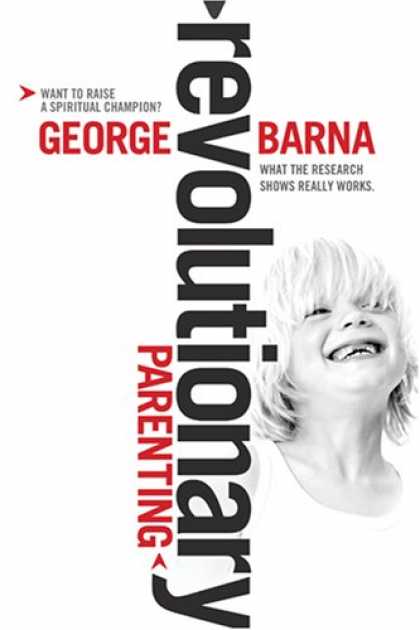
Revolutionary Parenting by George Barna


The cover art and title of this book would make you think that it is somewhat of a sequel to his book, Revolution. But it isn't. It is actually more of a sequel to his book, Think Like Jesus. I think that he just used the titling and cover art (as he did with Pagan Christianity) because the book, Revolution, was groundbreaking and controversial and therefore, popular.


If you'll remember, Think Like Jesus (which I reviewed way back when) used short tests amidst his polls to measure whether people were actual Christians or not - not just whether they gave lip-service to the label of "Christian". Obviously, such a test is practically impossible to give credence to, but it still enables one to sift a bit of the garbage away, so to speak.


Barna, then went further and gave people a slightly longer test to determine whether they had a Biblical worldview or not. He went on to say that those people with a solid Biblical worldview lived lives that were vastly different from those who did not have a Biblical worldview - despite whether or not they claimed to be a Christian.


In Revolutionary Parenting, Barna takes this idea a step further and polls children, teenagers and young adults (20 somethings). He determines which of these children/teens/young adults has a Biblical worldview and then tries to find common threads among the familial culture in which they were raised.


Once again, using his research, Barna is quick to point out that he is only the messenger, and that some of his findings are counter-cultural. This would be where this book ties in with Revolution - as he finds that "parenting that produces spiritual champions is often with little or no help from the Church."


Some of his findings:


  • The lion share of responsibility for raising children falls upon parents, not churches, schools, or daycare workers - no matter how much time children spend in these institutions. The more time parents spend with their children, the more success they have in spiritually shaping them.


  • Parents who put the emphasis on character development rather than academics, sports, arts, or other distractions have the most success.


  • Single parent homes are screwed. Seriously. As he puts it, the research simply shows that if you are a single parent, you are screwed.


  • One-income families are profoundly more successful at raising spiritual champions, despite its counter-cultural position. He says that families that bite the bullet and figure out how to leave one parent at home have a huge statistical advantage - like it or not.


  • Parents who use strong disciplinary measures - strict adherence to threatened punishments, curfews, etc. - have a big advantage despite the counter cultural trends.


  • Parents who pray together (outside of mealtime grace), study the Bible together, and engage in Spiritual discussion together have the major advantage over parents who rely on the Church and Youth Groups to cover this ground.


  • For the 20 odd-years that you are a parent to a child, this responsibility should be your primary responsibility. Not second or third to anything or anyone else.


Basically, the wishy-washy mediocre so-called "Christians" that were outed in Think Like Jesus are breeding and raising wishy-washy mediocre so-called Christians in the next generation.

Wednesday, August 19, 2009

Mars Hill Church, Seattle - Annual Report


Its weird. I don't go to Mars Hill Church in Seattle. Never been there, in fact. I occasionally check in on their podcasts, occasionally listen to their in-house worship music, and occasionally read their blogs.

But I don't belong to their fellowship, don't invest in their fellowship, and really don't have any plans to do either.

But for some strange reason, I feel a connection and a tie to their endeavors.

Obviously, I like Mark Driscoll as a preacher and an author.

But there is something about the transparency and purposefulness of their church that I find compelling.

Each year, I print out and read through the Mars Hill Church Annual Report. I love it. It gives so much information and inspiration. I don't know why exactly - I think maybe its because it makes me feel like a part of the mission - even when I'm not and have no intention of becoming a part of it.

I've read stories about people moving across the country in order to go to Mars Hill and be a part of its ministry. I appreciate these stories, but I am not wired this way.

I've also read stories about groups of people starting "unofficial" Mars Hill campuses in their own homes in far away parts of the country and the world - once again, I appreciate these stories, but I am not wired that way either.

No. I am happy to sit down with a cup of coffee and read through the Annual Report.

The cover page of the report says, "It's all about Jesus." The report is about 20 pages long. They give some stories of Changed Lives - stories that they run regularly on their website each week about people whose lives have been changed by Jesus.

The report talks about their regional growth, their local growth, and their global growth - missionary training, church planting, campus launches, etc. There are three whole pages on their financial endeavors, both incoming and outgoing. It is really quite detailed.

They talk about their micro missions projects. They also discuss their ministries which reach thousands - websites, technology, etc. They also focus on their discipleship ministries - home groups, bible studies, etc. They have 353 community groups with 3933 participants. They have 39 elders and pastors with 17 more in training. They are very purposeful in both discipleship of leaders as well as the church body as a whole.

They go into great detail about their church planting network. It is with chagrin that I note that they still do not have a church plant south of Orlando - I'd just like to check one out - is that too much to ask. They have planted 173 churches so far - 53 in the past year.

As I said - the report is inspiring. I like that, at this point in the game, Driscoll doesn't have his name plastered all over the report. If you didn't know any better, you'd forget that he was involved at all while reading through the report.

Monday, March 23, 2009

Fieldy: 2nd Korn member to be Born Again

Fieldy, the bassist for Korn, is now the second member of the band to become a Christ Follower. His book, Got the Life, came out this month - describing his conversion.


Fieldy is the reason that I took up playing the bass guitar. And I would be remiss if I didn't say that Korn was probably the most important band in my musical upbringing. Its weird that two of the five of them are now Christians. Now, if only Kid Rock could give up the strippers and find Jesus, I'd be set.


Here is an excerpt of an article about Fieldy's conversion:


When one his oldest friends, Korn guitarist Brian "Head" Welch, quit the band after finding religion, Fieldy scoffed.
He didn't listen when his father became terminally ill, and urged his boy one last time to give the Bible a shot.
But the night of the funeral, as his entourage kicked off its usual party, for once Fieldy didn't feel like throwing back beer after beer. Instead he found himself praying, asking for what he thought his father would have wanted: for Jesus to help him end the endless party.
The next morning, he flushed his pot down the toilet and says he never looked back, skipping rehab for religion in a single move.
"I didn't grow up with any of that, with prayer," he says of his first steps into Christianity. "I just opened my heart and said, 'I need help doing this.'"
He started to read the Bible. But, like many others, he also found his way to "The Purpose-Driven Life," the book that helped make Rick Warren, pastor of Saddleback Church, a national religious figure.
It was just a start. Though he had ideas to live a certain way, Fieldy – unlike his former bandmate Head – was seeking faith while still playing bass and otherwise performing with one of the biggest hard-rock acts in the world, Korn.
"When I made my change, I was thrown back into the pit of hell, on tour," he says. "There are dark things out there. And just because my band isn't partying" – Korn's core members all are sober now, he says – "doesn't mean it's not around you."
On tour, he says, he traded night for day. For the first time in years, he got up during the day on tour to sightsee in cities where he'd previously seen only the insides of arenas, hotels and strip clubs.
When temptations came near – and in that world temptation is a 24-hour business – Fieldy says he walked away.
The fridge outside his studio stocks Smartwater and Rockstar energy drinks, not wall-to-wall Coors Light as it once did.
On this day, Fieldy's 2-year-old son, Israel, plays upstairs, in the family room. Dena – who agreed to marry him even after he confessed all his sins against her – hangs out in the kitchen. Fieldy is just back from work; Korn is spending time in a Los Angeles studio, working on new songs, and Fieldy is able to stay at home. Every other weekend, Fieldy's daughters from an earlier marriage, Olivia, 10, and Sarina, 11, stay with him.
It's a common Orange County life – Dad at work, a blended family, financial comfort. But, Fieldy says, it takes him some extra work to stay right with God, and keep all this goodness around him. The Bible, he says, has replaced his bong as a way to start each day.
"It's like my morning workout. Start the day with something good, something uplifting.
"I'm in the book of Samuel right now, and it's so crazy!" Fieldy says, the rocker seeing a bit of heavy metal in the old epic tales. "People don't realize how dark and gory it is, but the whole story behind it is love. It's a trip how twisted up it is."
He hopes his own book, which he named after one of Korn's biggest hits, will reach people who might not otherwise be open to hearing about faith.
"I'd really like to reach people who look like myself," Fieldy says as he poses for a photographer with Israel in his heavily inked arms. "You never know, but the majority of the people (who read it), I hope they take the route I took.
"Maybe this can be that little bit of a seed I can plant out there."

Thursday, November 15, 2007

Church - The Time Consumption Monster?

This quote comes from the Mustard Seed (a faith-based un-church community in Northern Palm Beach County). It is a response to No Good Reason To Go To Church.

"Attractional models of church and need-based programs simply do not leave time for people to actually be in their communities. There is just too much effort required to pull these things off, and the monster must be continually fed by more money, more volunteers, more staff, and more time."

I guess the question would be: if you spend all of your time in the church, what's left for the neighbors? How do you balance between the two? Does your church encourage or inhibit your involvement in the very community in which you live?

Saturday, October 20, 2007

Photos of our Gatherings

Our group of friends try to get together as often as possible. A few of us have been known to throw parties at our homes. Sometimes we go out to the bar, or we go bowling, play billiards or throw darts. And sometimes we just gather and hang out around a bonfire. For the past couple years, we've managed to have these gatherings at least once or twice a month.

We've grown to love each other, depend on each other, and we've met some great new people too. Depending on the circumstances, our numbers have ranged anywhere from 8 to 45 people. There is now a link on the right-hand side of this site which is labeled "Photos of our Gatherings". This link will continue to catalog some of the pictorial highlights from our gatherings.


Template Designed by Douglas Bowman - Updated to Beta by: Blogger Team
Modified for 3-Column Layout by Hoctro